
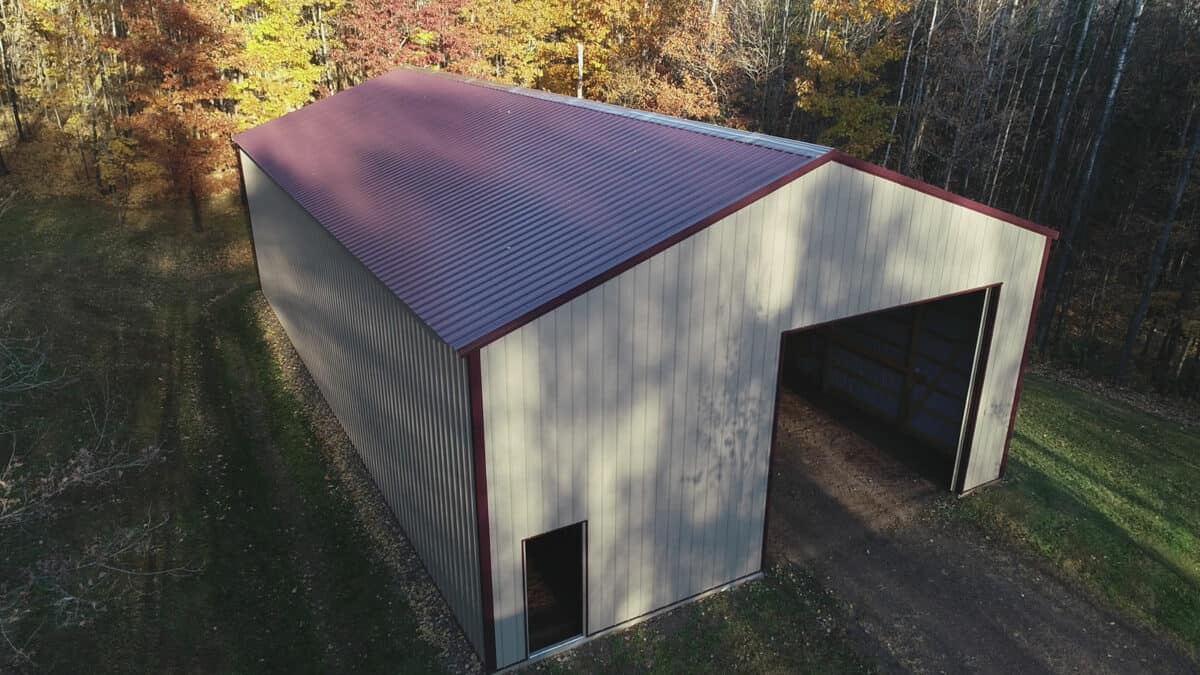
Choosing the right pole barn size is a key decision that affects how you use the space now and in the future. At Sherman Pole Buildings, we help Minnesota customers focus on function, flexibility, and local requirements. This guide covers standard pole barn sizes and dimensions, explains efficient layouts, and helps you determine what works best for your property and budget.
From the article, you will learn
- What are considered standard pole barn sizes in the U.S.
- How pole barn dimensions impact usability and long-term value
- The difference between width, length, and sidewall height
- Why clearance matters more than floor area alone
- How to choose between compact and expandable layouts
- What makes some layouts more cost-efficient than others
- When a building qualifies as a large pole barn
- How door placement affects traffic flow
- Why local codes influence final sizing
Understanding standard pole barn sizes and how they’re used
Most pole buildings fall into a range of proven layouts that balance material efficiency and functionality. A typical pole barn often starts around 24×32 feet and scales upward depending on use. These common pole barn sizes work well because they align with structural spacing, door options, and roofing systems.
Rather than focusing only on square footage, experienced builders evaluate how the space will function. For example, a storage-focused layout may prioritize width, while a workshop benefits from added length and clearance. This is why pole building sizes are best chosen based on use—not guesswork.
Pole barn dimensions that actually matter (width, length, height)
While footprint gets most of the attention, barn dimensions include more than length and width. Sidewall height plays a critical role in usability, especially for equipment storage, RVs, or stacked materials. Taller walls also improve airflow, lighting options, and future adaptability.
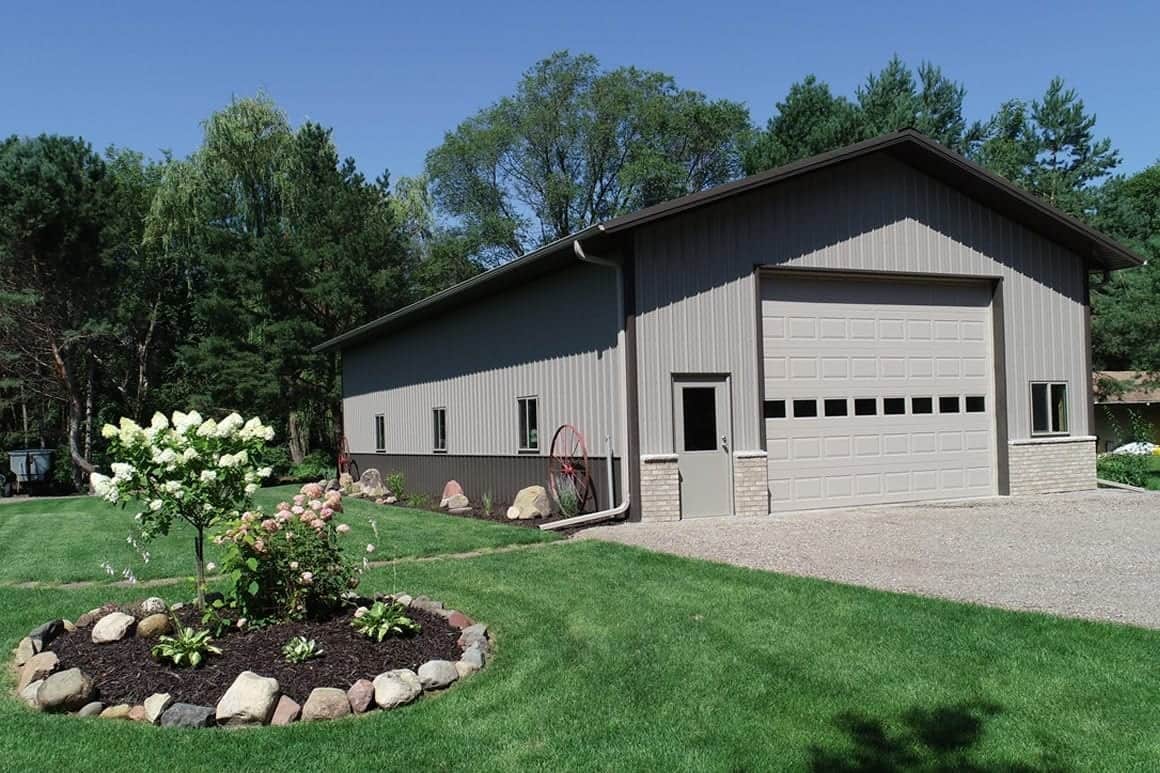
Door clearance is another major factor. Overhead doors, sliding doors, and walk doors all require planning to avoid wasted space. If you’re considering living space or climate control, insulation andenergy efficiency should also factor into the dimensional planning process.
Common sizes, popular layouts, and affordability
Some layouts continue to stand out because they offer flexibility without unnecessary cost. Among the popular pole barn sizes, mid-range footprints often strike the best balance between material use and interior function. The most cost effective pole barn size is usually one that minimizes wasted volume while still allowing room to maneuver equipment or vehicles.
Oversizing adds cost not just in materials, but also in site prep, roofing, and long-term maintenance. On the other hand, undersizing limits usability and future expansion. If your plans include living space—such aspole barn houses—layout efficiency becomes even more important, especially when blending residential and storage areas.
Choosing the right size for your property and future needs
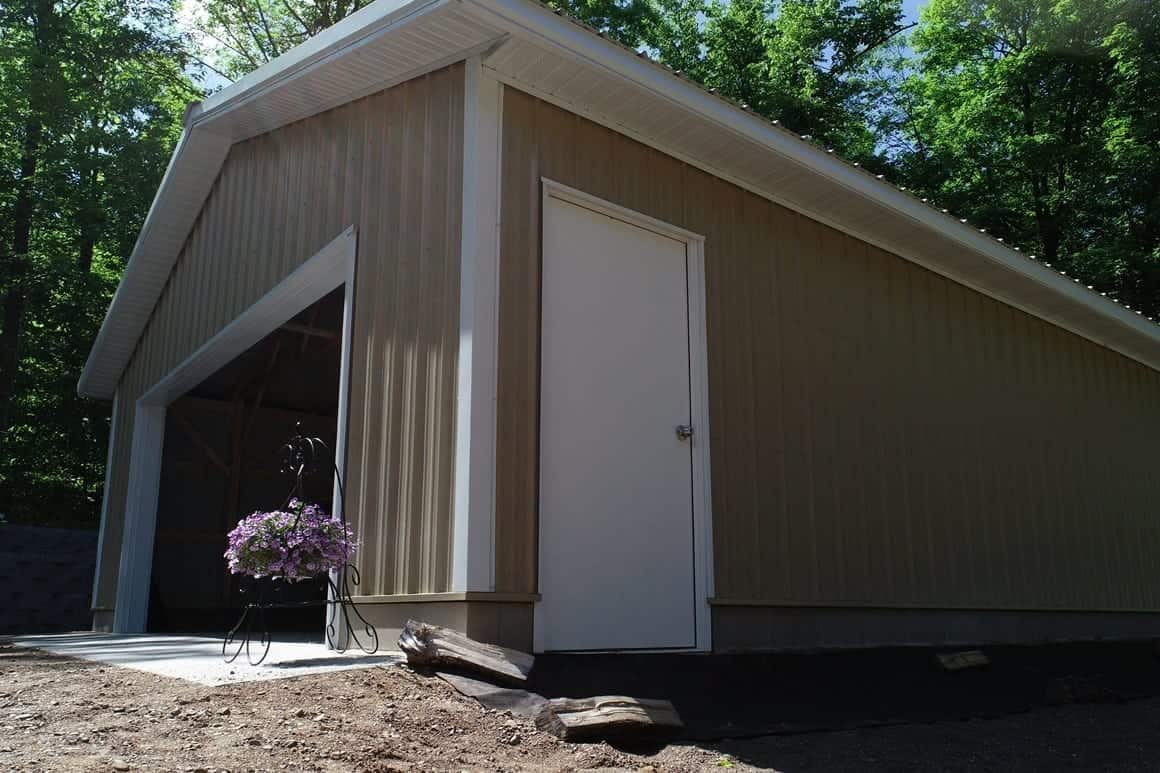
A building should work for today without boxing you in tomorrow. That’s why planning for access points, turning radius, and workflow is just as important as raw square footage. A large pole barn isn’t always better if it disrupts traffic flow or exceeds what you’ll realistically use.
Using visualization tools can help. The3D building designer tool allows you to test layouts, door placements, and proportions before committing. Reviewing availablebuilding features also helps align size with function.
FAQ
What are standard pole barn sizes in the USA?Standard sizes typically range from 24×32 to 40×60 feet, depending on use and layout needs.
What is a good sidewall height for a pole barn?Most buildings use sidewall heights between 10 and 14 feet, though taller walls are common for equipment or RV storage.
What is considered a large pole barn?Buildings exceeding 40×80 feet or designed for commercial/agricultural use are often considered large.
What is the most cost effective pole barn size?Mid-sized layouts that maximize usable space without excess height or width are typically the most cost-efficient.
Is a 30×40 pole barn big enough for a garage and shop?Yes, for many homeowners this size comfortably fits multiple vehicles and a modest work area.
Is a 40×60 pole barn a good all-around size?It’s a versatile option that supports storage, workshops, or mixed-use needs with room to grow.
Do I need permits or zoning approval based on barn dimensions?Yes. Permitting and zoning often depend on size, use, and location, and vary by jurisdiction.
How we size pole buildings?
- Inventory first.We start by listing what will go inside now—and what may be added later. Vehicles, tractors, implements, tools, hay, or livestock all influence size.
- Clearance planning.Sidewall height and door clearance are set based on what needs to fit and how you’ll move inside the space.
- Access & doors.Door type, placement, and traffic flow are planned so people and equipment don’t compete for space.
Typical options include heights from 8–18 ft, widths from 20–80 ft, and lengths from 20–240 ft. To test layouts quickly, try our on-site Design Your Building 3D tool.
Assumptions / Disclaimer
Sherman Pole Buildings operates primarily in Minnesota. The sizes and examples discussed here are general guidelines. Final building dimensions depend on site conditions, intended use, and local requirements. Snow load, wind load, and design criteria can vary by county or city and must comply with applicable building codes. Each structure is engineered for its specific construction location. Customers should confirm zoning, permitting, and setbacks with their local authority or through available permitting support.
#desc
Explore standard pole barn sizes and dimensions, discover affordable options, and learn how to choose the right size for Minnesota properties.