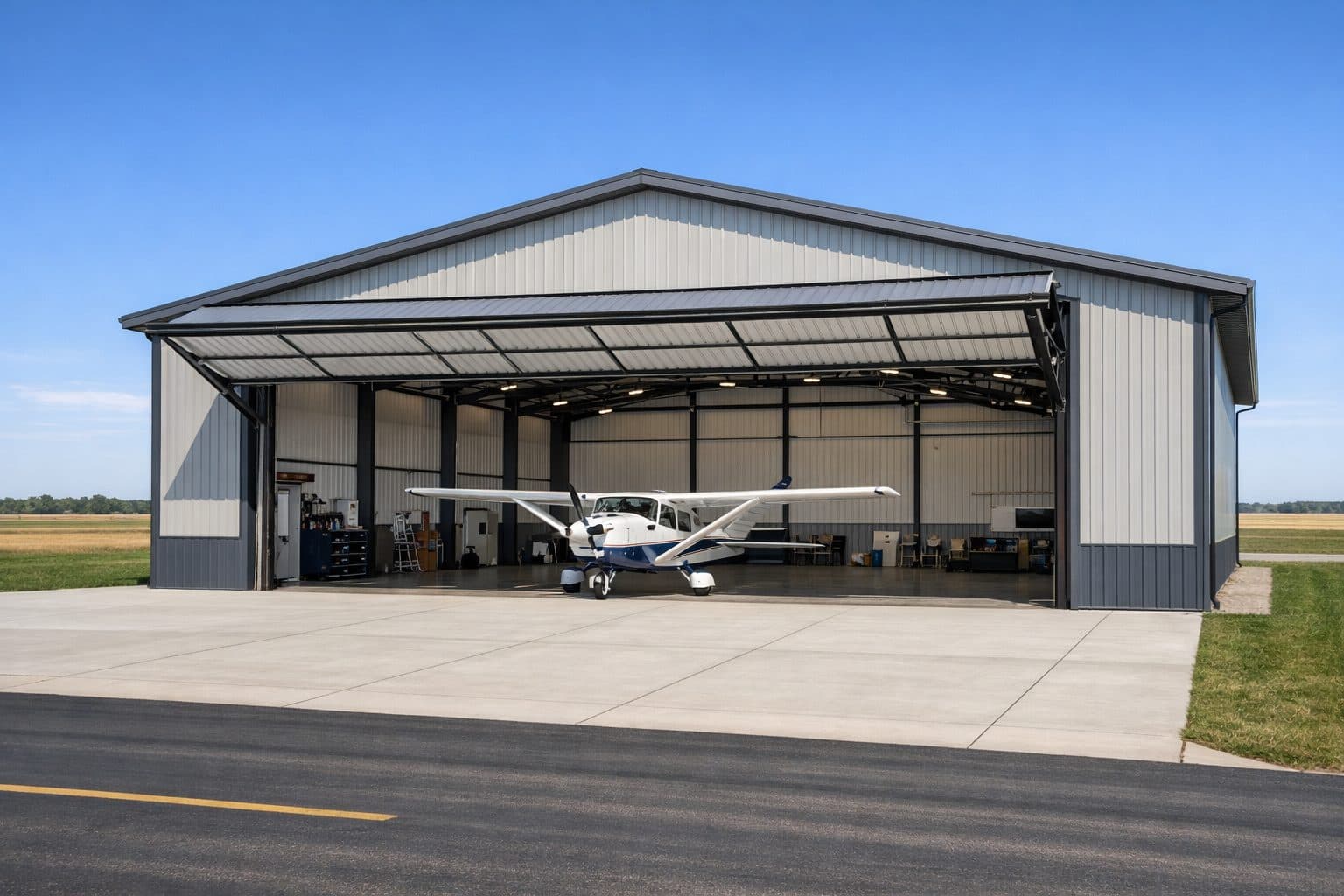
Part of our Agricultural Buildings collection →
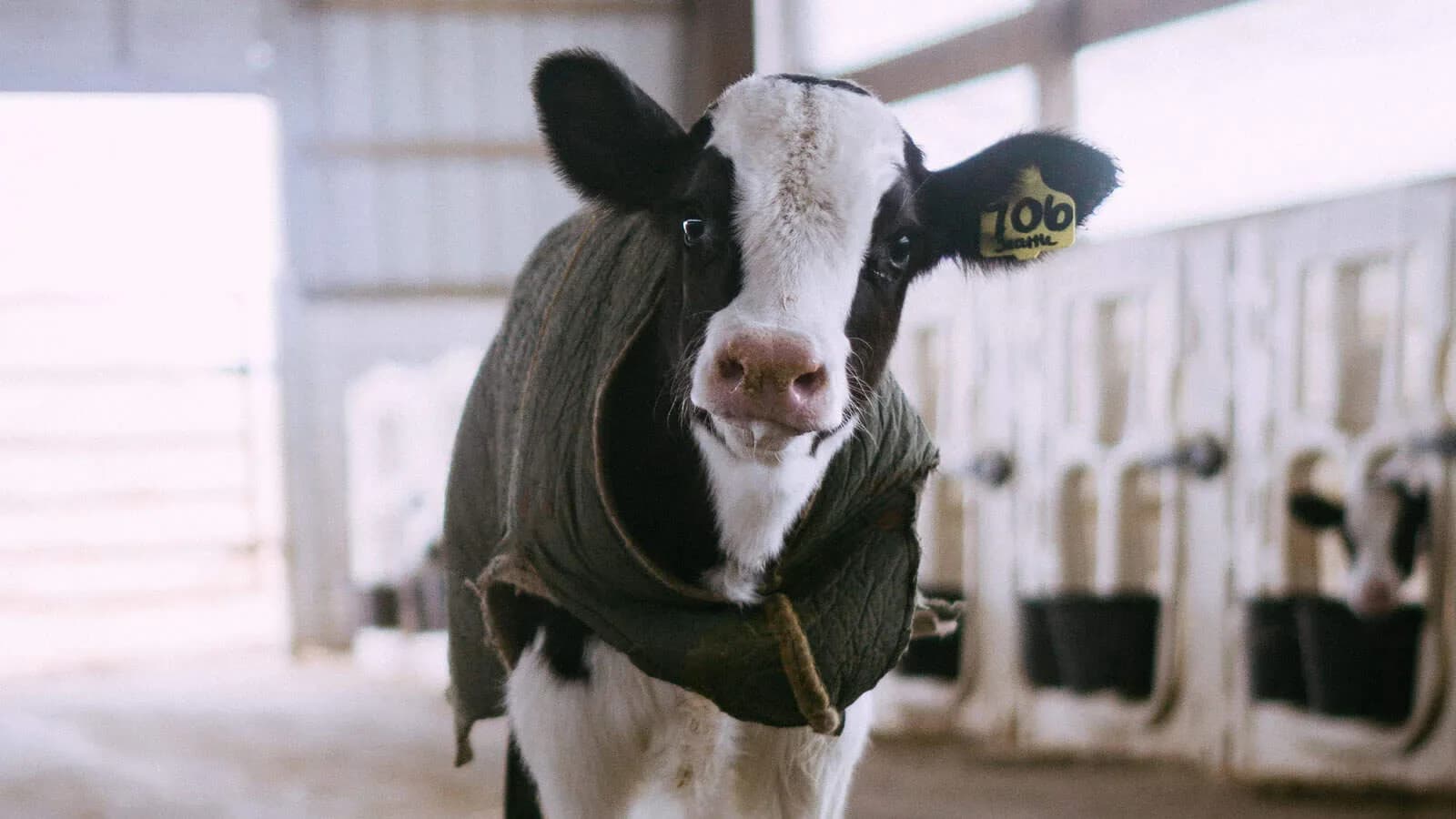
Livestock & Dairy Barns — Minnesota
Post-frame barns planned for the animals, the feed, and the long Minnesota winters.
Sherman Buildings designs and builds post-frame livestock and dairy barns across Minnesota and Northwest Wisconsin — bedded-pack and loose-housing dairy, calf and heifer barns, beef and horse shelters, and split-use livestock/feed/equipment layouts. Every barn is planned around ventilation, animal flow, and feed/storage adjacency, engineered to site-specific snow and wind loads, and backed by a 30-year limited structural warranty.
Purpose-Built for Livestock, Not General Storage
A livestock barn is not a machine shed with a fence in it. The building has to breathe, move animals cleanly, handle manure and moisture, and sit close enough to feed and forage that you’re not running a tractor in circles every morning. Sherman plans those things into the design before the truss package is finalized — not bolted on afterward.
Post-frame construction is an ideal fit. Clear-span interiors give you flexibility on pen layout and alley width without columns in the middle of a gate swing. Eave-side overhead or sliding doors sized for tractors and skid steers keep daily operations working through the winter. Ridge vents, adjustable sidewall curtains or louvers, and properly sized eave openings keep the air moving — which is what actually keeps a livestock building healthy long-term.
Sherman has been building ag structures across Minnesota and the upper Midwest for 50 years. For how livestock barns relate to other ag buildings, see /machine-sheds/ for equipment-first storage and /hay-feed-sheds/ for forage-first storage — most working farms end up with all three, often combined into one or two split-use buildings.
Barn Types We Build
Bedded-Pack & Loose-Housing Dairy
Naturally ventilated bedded-pack and loose-housing barns for small and mid-size dairy operations. Ridge vents, adjustable sidewall curtains, and clear-span interiors built around the animal flow you need.
Calf & Heifer Housing
Individual or group calf pens and dedicated heifer barns sized around pen layout, bedding pack depth, and wash/utility access — with ventilation matched to young-stock needs.
Beef, Horse & Hobby-Farm Shelters
Three-sided loafing sheds, run-in shelters, horse barns with tack rooms, and hobby-farm livestock buildings — scaled for a handful of animals up to a working cow-calf operation.
Split-Use Livestock + Feed + Equipment
Combined buildings with a livestock wing, hay/feed bay, and equipment parking under one engineered roof — a common Minnesota hobby-farm layout that keeps forage, animals, and equipment adjacent without three separate builds.
How We Plan a Minnesota Livestock Barn
Ventilation First
Condensation, ammonia, and stagnant air are what wreck livestock buildings. Sherman plans ridge vents, adjustable sidewall curtains or louvers, and eave openings sized to the animal count and building width — not a generic spec.
Animal Flow
Gate placement, alley widths, pen sizing, and handling areas get laid out before the truss package is finalized. A barn you can move cattle, horses, or heifers through cleanly is worth more than a prettier building you fight every day.
Feed & Storage Adjacency
Hay, silage, feed, and bedding need to live close to the animals they serve. We plan the livestock barn and the hay/feed shed or forage bay together, so tractors and skid steers aren't driving long loops to feed.
Durable Post-Frame Construction
Pressure-treated ground-contact columns, frost-depth footings, heavy-gauge steel roof and siding, and trusses engineered to site-specific snow and wind loads. Every Sherman ag building is built for a working decade-after-decade service life.
Moisture & Manure Management
Concrete scrape alleys, perimeter curbs, sloped bedded-pack floors, and roof/gutter runoff all get planned during the site visit. Livestock buildings that don't deal with moisture end up with rotted columns and unhappy inspectors.
Interior Clearances & Doors
Eave-side overhead or sliding doors sized for tractors, manure spreaders, or skid steers — plus interior clearances that match how you actually work the barn. Eave-side door placement is the standard for Minnesota snow management.
Related Agricultural Pages
Livestock & Dairy Barns — FAQ
Does Sherman Buildings build livestock and dairy barns in Minnesota?
Yes. Sherman designs and builds post-frame livestock and dairy barns across all of Minnesota and Northwest Wisconsin — bedded-pack and loose-housing dairy barns, calf and heifer housing, beef and horse shelters, loafing sheds, and hobby-farm livestock buildings. Every barn is engineered to site-specific snow and wind loads and planned around the animal flow, ventilation, and feed adjacency your operation needs.
How is a livestock barn different from a machine shed or hay/feed shed?
A machine shed is built around equipment — wide eave-side doors, tall clear-span interiors, equipment access. A hay/feed shed is built around forage protection and ventilation. A livestock barn is built around animals: pen layout, gate placement, ventilation tuned to animal count, moisture and manure management, and interior clearances for handling. Many Sherman hobby-farm customers combine all three in one split-use building — see /machine-sheds/ and /hay-feed-sheds/ for the equipment-first and forage-first versions.
What ventilation does a Minnesota livestock barn need?
Natural ventilation is the default for most small and mid-size Minnesota livestock barns: ridge vents running the length of the building, adjustable sidewall curtains or louvers, and properly sized eave openings. Powered ventilation (tunnel or cross-ventilation) can be added for tighter year-round control. The right spec depends on animal type, building width, stocking density, and local climate — Sherman plans ventilation during the design conversation, not as an afterthought.
Can you build a dairy, calf, or heifer barn that meets inspection and code?
Yes. Bedded-pack depth, slope, concrete scrape alleys, perimeter curbs, drainage, and ventilation all factor into Minnesota dairy inspection. Sherman coordinates the structural post-frame build with your herd-specific needs and with the local county and township permitting — bring your inspector’s feedback into the design conversation early and we’ll plan around it.
Do you build horse barns and hobby-farm livestock shelters?
Yes. Horse barns with stalls, tack rooms, and wash bays, three-sided run-in shelters, loafing sheds, and hobby-farm livestock buildings are a steady part of our work mix. For smaller hobby operations, a split-use building with livestock on one end and a machine/hay bay on the other is a common Minnesota layout — often more cost-effective than three separate structures.
Are Sherman livestock barns engineered for Minnesota snow and wind loads?
Yes. Every truss package is engineered to the specific site, not a generic regional spec. Ground snow loads vary across Minnesota (roughly 35–60 psf depending on location), and northern counties generally sit at the higher end. Pressure-treated ground-contact columns, frost-depth footings, heavy-gauge steel roofing, and site-specific truss design are standard on every ag build.
Can I add feed storage and equipment parking to the same building?
Yes — and for many Minnesota hobby farms it’s the right answer. A split-use post-frame building with a livestock wing, a ventilated hay/feed bay, and an equipment parking section under one engineered roof keeps forage, animals, and tractors adjacent and generally costs less than three separate structures. We plan the whole layout in one pass.
Does Sherman build livestock barns across all of Minnesota and NW Wisconsin?
Yes. Livestock and dairy barns are a core offering across our entire service area — all of Minnesota and Northwest Wisconsin, with primary scheduling within approximately 200 miles of our Mora, MN headquarters. That includes the Stearns County dairy belt, central Minnesota row-crop and mixed operations, Brainerd lakes and Duluth-area hobby farms, Pine County and the I-35 corridor, and the Polk/Burnett/Barron/Washburn/Douglas region of NW Wisconsin.
How do I get a quote for a livestock or dairy barn?
Request a free, no-obligation quote through our online form at /quote-request/, start the Get Started flow at /get-started/, or call (320) 679-3438 (Mon–Fri 8:30am–5pm Central). Include animal type and count, intended layout (bedded-pack, calf pens, horse stalls, etc.), any feed/equipment adjacency you want under the same roof, and your city or ZIP — a project manager will follow up on site, sizing, and scheduling.
Ready to Plan Your Livestock Barn?
Talk to a Sherman Buildings project manager about ventilation, animal flow, feed adjacency, and a post-frame barn engineered for your herd and your site.
Livestock Barns by Region
Regional pages with local snow-load, permitting, and area FAQs.
Explore More Building Types
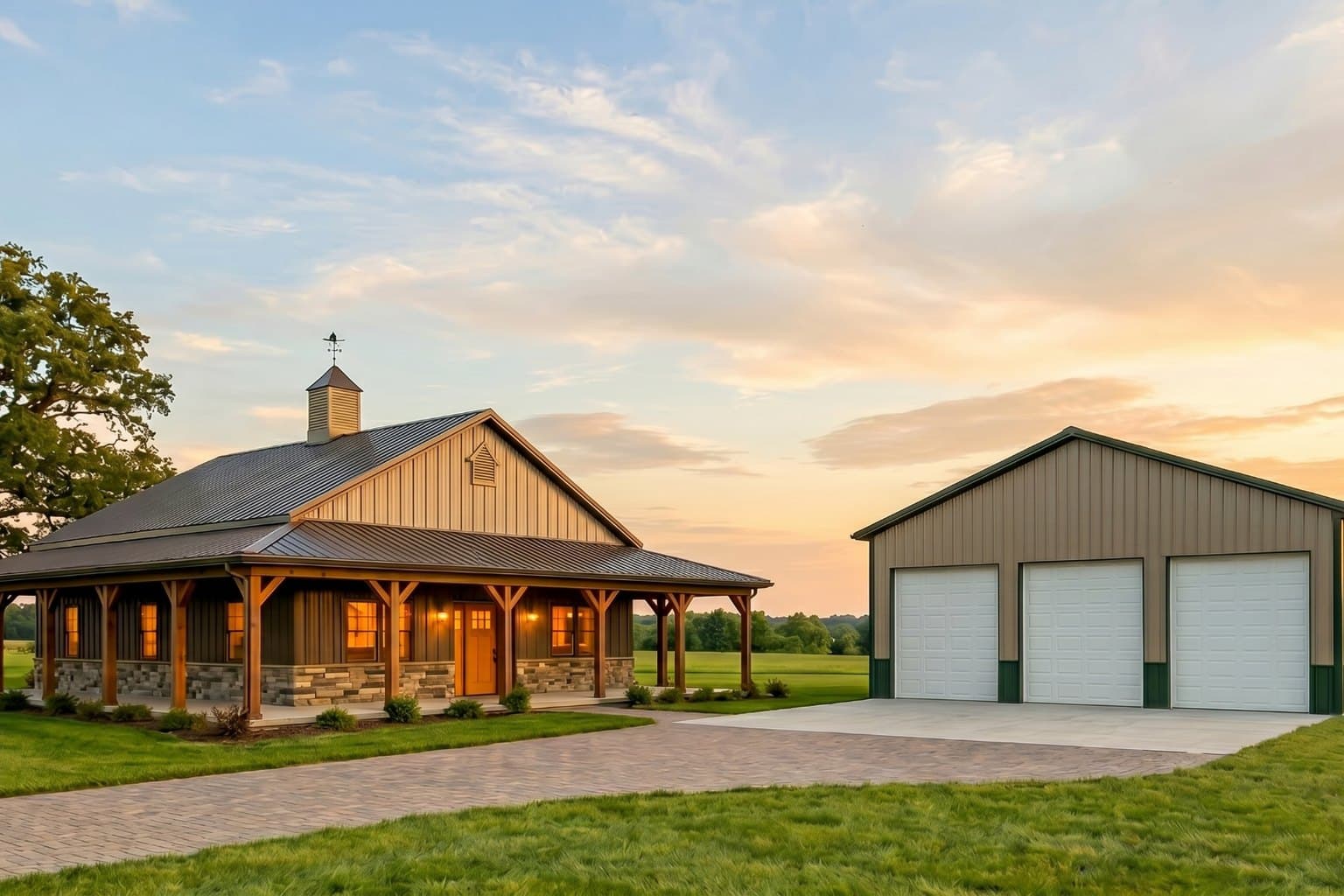
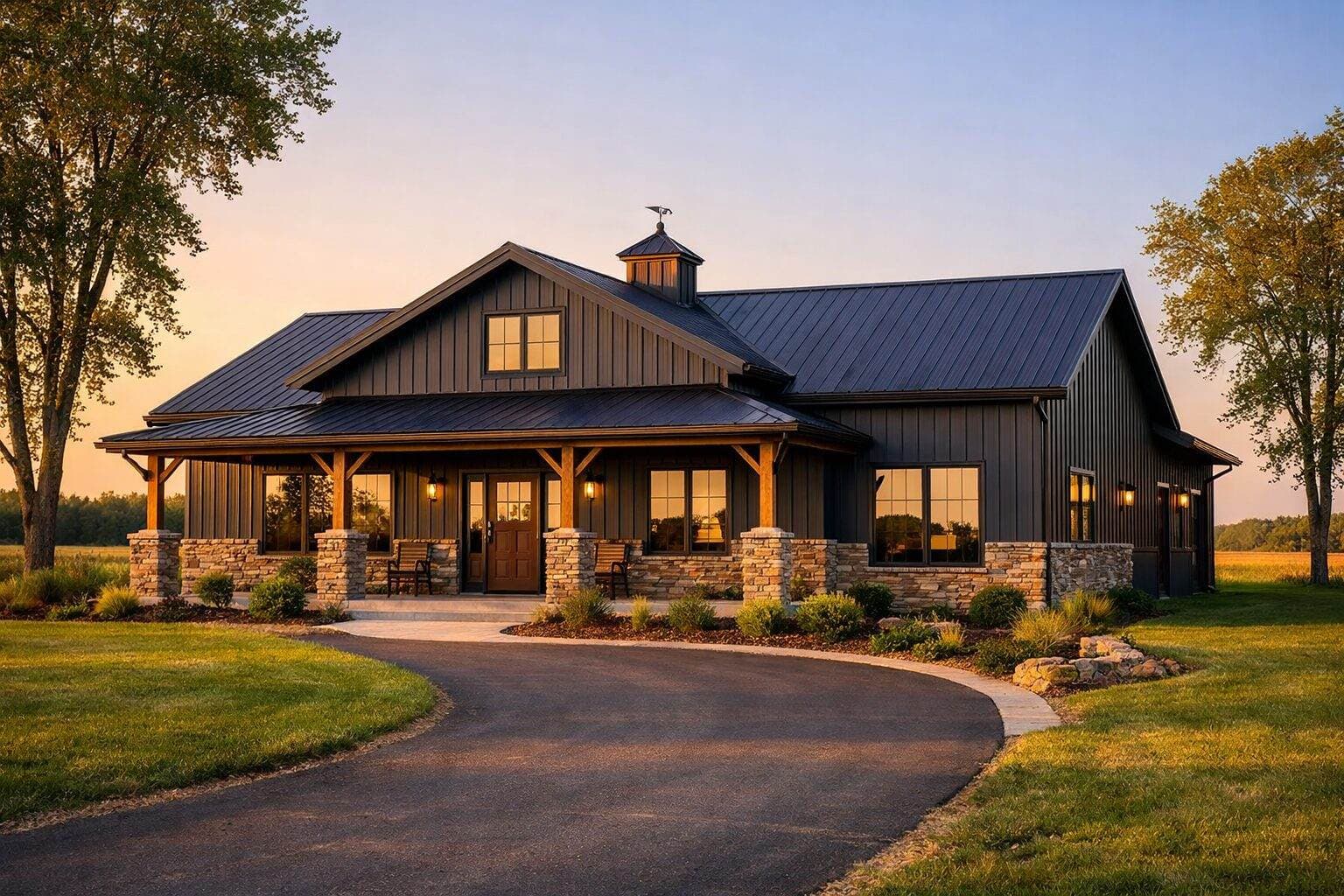
Sherman Buildings has been building quality post-frame structures for 50 years. Browse our full range of homes and pole buildings.
Homes
Pole Barns
General Storage & Garages
Agriculture & Machine Sheds
Commercial Buildings
She Sheds
Man Caves