What actually drives the number
Pole Barn Cost Factors in Minnesota
Size and span, concrete, doors, insulation, site access, snow load, permits — what actually shapes a Minnesota pole barn quote. No price-per-square-foot shortcuts.
Request a QuoteSherman Buildingsdoes not publish a ballpark price-per-square-foot for Minnesota pole barns, because a single number doesn’t survive real site conditions. Cost is driven by size and width/span, sidewall height, concrete scope, number and type of doors, insulation and heating strategy, liner panels, snow and wind load engineering, site access, soil conditions, permits, and timeline. Every Sherman pole barn is quoted to the specific site and program — submit a quote request with your city or ZIP, use, and rough footprint to start a real conversation.
What Affects Pole Barn Cost in Minnesota?
Square footage is the obvious lever, but it’s not the most important one. Width and span drive the engineered truss package; sidewall height drives column length and wall area; concrete scope, doors, insulation, and interior finish each move the number in ways square footage does not capture. Two pole barns with the same footprint can carry very different totals depending on how those levers are set.
Minnesota-specific factors layer on top — snow-load bands that vary across the state, frost-depth footings, soil conditions in the Arrowhead and Iron Range, seasonality for concrete, and county- or township-level permitting. Sherman engineers every truss package to the specific site and coordinates permits and inspections as part of the build.
For barndominium and pole-barn-home cost, see Barndominium cost factors in Minnesota — the driver set overlaps but finish level and mechanicals shift weight toward the living scope.
Cost Factors, Line by Line
Size, Width & Span
Footprint is the obvious driver, but width matters more than square footage. A 40-foot-wide shell uses a different truss and column package than a 60- or 80-foot-wide clear-span shell. Longer spans require bigger trusses, heavier hardware, and tighter column spacing.
Sidewall Height & Roof Pitch
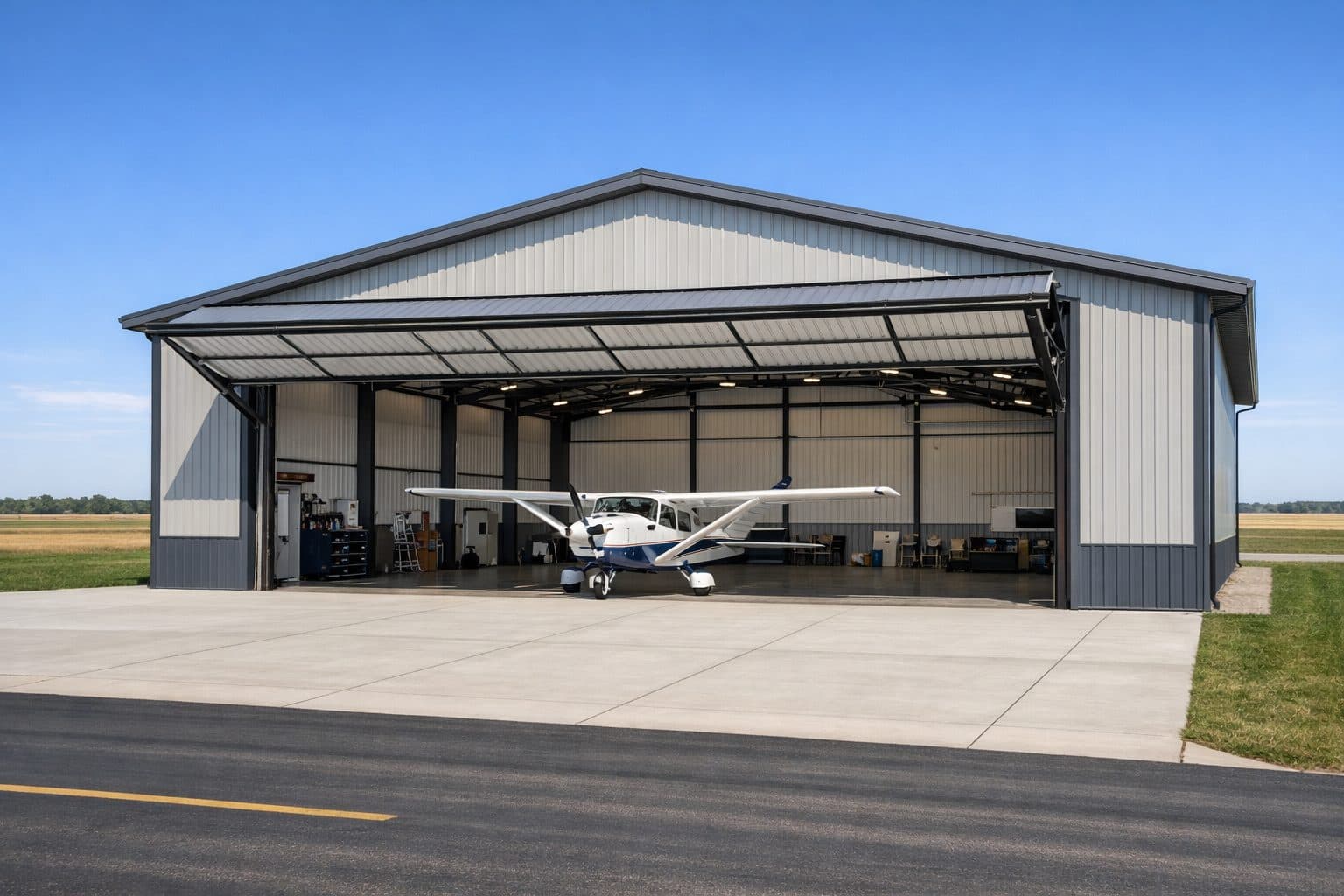
Taller sidewalls (commonly 14–16 ft for shop, equipment, or hangar use) drive more framing, sheathing, and column material. Roof pitch affects truss geometry, shingle vs. steel roof area, and snow-shed behavior.
Concrete Slab
Slab thickness, fiber or rebar reinforcement, floor drains, control joints, and any prep for radiant-floor tubing all scale with use. An equipment-storage slab and a finished-shop slab are very different line items, and both differ from a floating barn floor.
Doors
Number, size, and type of overhead doors drive cost more than most owners expect. Insulated vs. non-insulated, standard-height vs. tall, manual vs. opener-equipped, and whether headers clear framed walls all factor in. Add-on service doors and windows belong on the same list.
Insulation, Vapor & Heating Scope
Unconditioned storage, partially conditioned workspace, and fully heated/cooled shop are three different builds. Wall and ceiling insulation strategy, vapor control, and whether the building is heated (unit heater, radiant, in-floor) all pull material and mechanical scope.
Liner Panels & Interior Finishes
Steel liner panels or plywood on the walls and ceiling change the interior finish line item. Liner panels also affect insulation detailing and electrical rough-in. A bare-shell barn and a fully lined shop are both valid — just very different scopes.
Snow & Wind Load Engineering
Minnesota snow-load bands run heavier in the Brainerd and Duluth regions than in the Twin Cities, and wind exposure on open acreage adds load. Every Sherman truss package is engineered to the specific site — not a generic regional spec.
Site Access & Grading
Driveway width and fall toward/away from the building, soft spring ground, tree removal, and concrete-truck access all affect what it takes to get a crew and material to the site. Rural and wooded lots frequently carry more site-prep scope than infill lots.
Foundation & Soil Conditions
Frost-depth footings and column embedment are non-negotiable in Minnesota. Rocky or bedrock-near soils (common in the Arrowhead and Iron Range) may require drilled piers or alternative footing details. Soft or organic soils may require additional prep.
Electrical & Plumbing (by Others, Typically)
Electrical service, panel, rough-in, lighting, and opener wiring are generally handled by licensed local trades. Plumbing (if any) — hose bibs, floor drains, wash-down — is scoped with the owner. These are coordinated with the shell build but usually invoiced separately.
Permits, Zoning & Inspections
Setbacks, accessory-structure limits, impervious-surface thresholds, and building permits are handled at the county or township level and vary across Minnesota. Engineered stamps are standard on every Sherman build; we help guide the local permit process.
Timeline & Scheduling
Locked-in plans build faster and more predictably than "we’ll figure it out on site." Change orders during framing are the single most common reason a project lands above the original quote. Seasonality also matters — late-fall concrete and winter framing carry their own constraints.
Sherman does not publish ballpark or per-square-foot prices. Every pole barn is quoted to the specific site, use, and scope.
Regional Context
Sherman’s service area is all of Minnesota and Northwest Wisconsin, with primary scheduling within approximately 200 miles of our Mora, MN headquarters. Cost drivers vary regionally in ways worth knowing up front:
- Twin Cities exurban — lighter snow-load band, but acreage grading, subdivision design standards, and municipal permitting can add scope.
- St. Cloud / central MN — mixed ag, residential, and commercial work; snow loads between metro and Brainerd bands.
- Brainerd Lakes — heavier snow-load band; lake-lot soils and shoreland setbacks can shift foundation and site scope.
- Duluth / Arrowhead / Iron Range — heaviest snow loads and often shallow bedrock or rocky soils; drilled piers or alternative footings are common.
- Northwest Wisconsin — Polk, Burnett, Barron, Washburn, and Douglas counties; permits and zoning differ from Minnesota and are handled case-by-case.
Cost by Building Use
The drivers above apply to every post-frame project, but which of them dominates depends entirely on what the building is for. Here is where the money tends to go by use case.
- Machine sheds and equipment storage — clear-span width, eave height, and the door package carry the budget. Floor choice (full slab versus gravel with a concrete apron) is the biggest single swing.
- Heated shops — insulation, vapor control, ventilation, and the heat system itself. The shell is the smaller half of the number once a building is conditioned.
- Pole barn homes and barndominiums — interior finish level dominates everything else. See barndominium cost in Minnesota for the full breakdown, and Structure Dried In if you plan to finish the interior yourself.
- Livestock barns — ventilation, moisture control, and interior surfaces that stand up to animals and washdown.
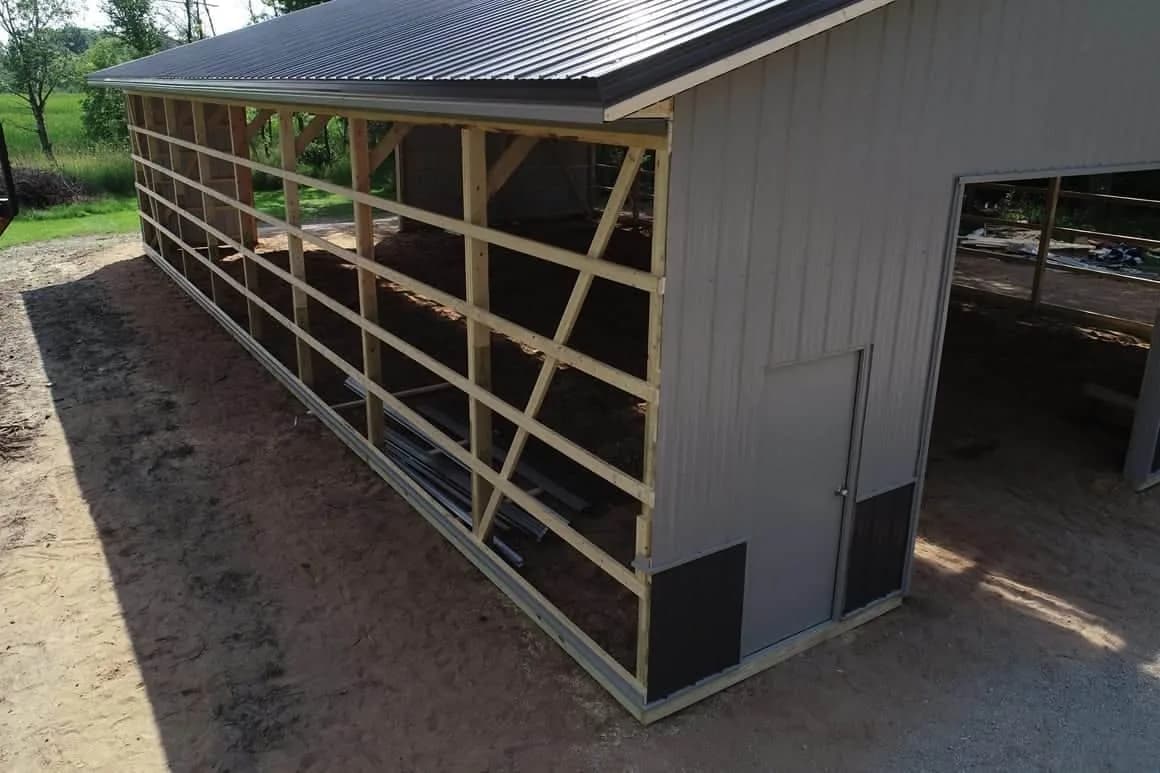
- Comparing against a barn kit? — a kit invoice covers materials only. Price out concrete, site work, labor, and permits before you compare it to a built quote.
Explore More
- Pole barn builders in Minnesota (state hub)
- Barn kits in Minnesota — what a kit price leaves out
- All building types Sherman offers
- Machine sheds & ag buildings
- Hay & feed sheds
- Storage & garage portfolio
- Commercial post-frame portfolio
- Barndominium cost factors in Minnesota
- Building features, warranty & options
- Financing options
- Request a free quote
Pole Barn Cost in Minnesota — FAQ
How much does a pole barn cost in Minnesota?
Pole barn cost in Minnesota depends on size, width/span, sidewall height, concrete scope, number and size of doors, insulation and heating, liner panels, site conditions, and current material pricing — not a simple per-square-foot number. Two buildings with the same footprint can land at very different totals based on those choices. The only accurate number for your project is a Sherman quote built around your specific site and program.
Why doesn't Sherman publish a price per square foot?
A per-square-foot number sets an expectation that doesn't survive real site conditions. Two 2,400 sq ft pole barns with different widths, sidewall heights, door counts, concrete scopes, insulation levels, and site-prep needs can differ substantially. We quote each project so the number you see reflects your actual scope — not an average that might not apply.
What drives the biggest swings in pole barn cost?
Typically five things: (1) width/span and sidewall height — those drive the engineered truss and column package; (2) concrete scope — slab thickness, drains, and any prep for radiant; (3) doors — number, size, and type; (4) insulation and heating scope — unconditioned vs. conditioned; and (5) site prep — grading, access, tree removal, and any soil remediation. Locking those scopes early is the best way to keep a project on budget.
How does sidewall height affect the quote?
Sidewall height changes column length, wall sheathing area, and door header detailing — all of which scale cost. A 10–12-foot sidewall is typical for residential storage and hobby-farm use; 14–16 feet is common for working shops, equipment bays, and hangars where lift and overhead clearance matter. Pick the height from the use, not from a round number.
Do you build bare shells, finished shops, or both?
Both. A bare-shell storage pole barn (no insulation, no liner, no heat) and a fully lined, heated, conditioned shop are both common. Most projects land somewhere in between — insulated walls/ceiling, lined to a working height, a unit heater, opener-equipped overhead doors, and a concrete slab. Your Sherman project manager will help define the scope at the right level for your use.
How does site access affect cost?
A lot. Concrete trucks need a reasonable approach, framing crews need to stage material, and soft ground in spring can delay or complicate a pour. Long driveways, wooded lots, and steep grades all add scope. We walk the site and plan staging and temporary access before committing to a schedule.
Are electrical and plumbing included in the Sherman quote?
Typically electrical and plumbing are coordinated with local licensed trades and handled on a separate line — they are not usually bundled into the shell quote. Sherman can help guide owners to trusted electricians and plumbers in the region; for simple service runs and opener wiring we will confirm scope during design.
Do I need a permit for a pole barn in Minnesota?
Yes — in nearly all Minnesota jurisdictions. Setbacks, accessory-structure limits, impervious-surface thresholds, and building permits are handled at the county or township level and vary widely. Engineered truss and column drawings are standard on every Sherman build, and we help guide the local permit process as part of the project.
What about snow and wind loads — are those factored in automatically?
Yes. Sherman engineers every truss package to the specific site. Minnesota snow-load bands run heavier in the Brainerd Lakes and Duluth/Iron Range regions than in the Twin Cities, and wind exposure on open acreage adds load. Pressure-treated ground-contact columns, frost-depth footings, and trusses sized to the local snow and wind loads are standard.
How do I get a pole barn quote?
Request a free, no-obligation quote through /quote-request/, start the Get Started flow at /get-started/, or call (320) 679-3438 (Mon–Fri 8:30am–5pm Central). Include your city or ZIP, intended use, and rough footprint — a project manager will follow up on sizing, site, and scheduling.
Get a Real Quote on a Minnesota Pole Barn
Skip the ballpark number — we’ll scope your project to the site and give you a real quote. Family-owned Minnesota post-frame since 1976.
Explore More Building Types
Sherman Buildings has been building quality post-frame structures for 50 years. Browse our full range of homes and pole buildings.
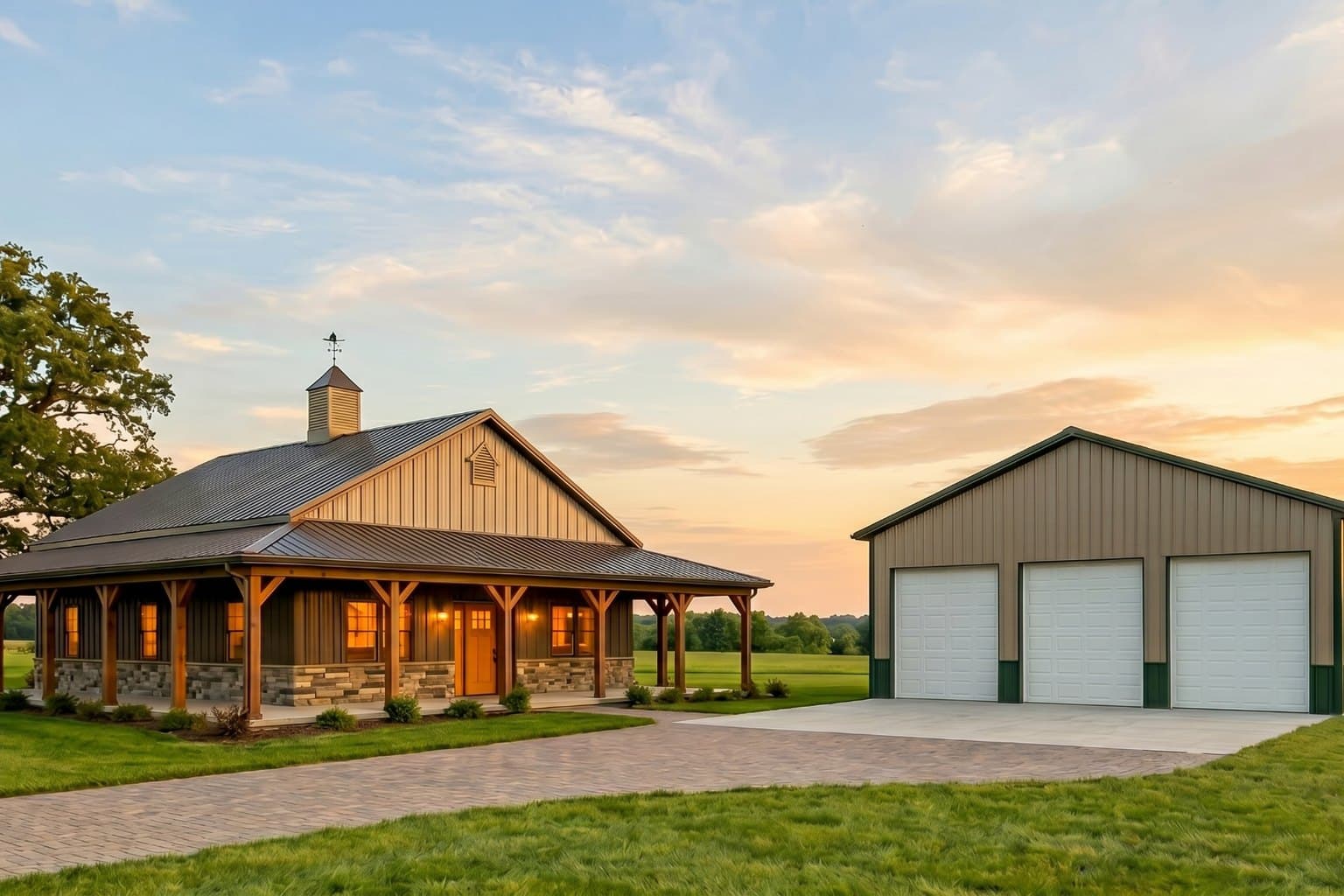
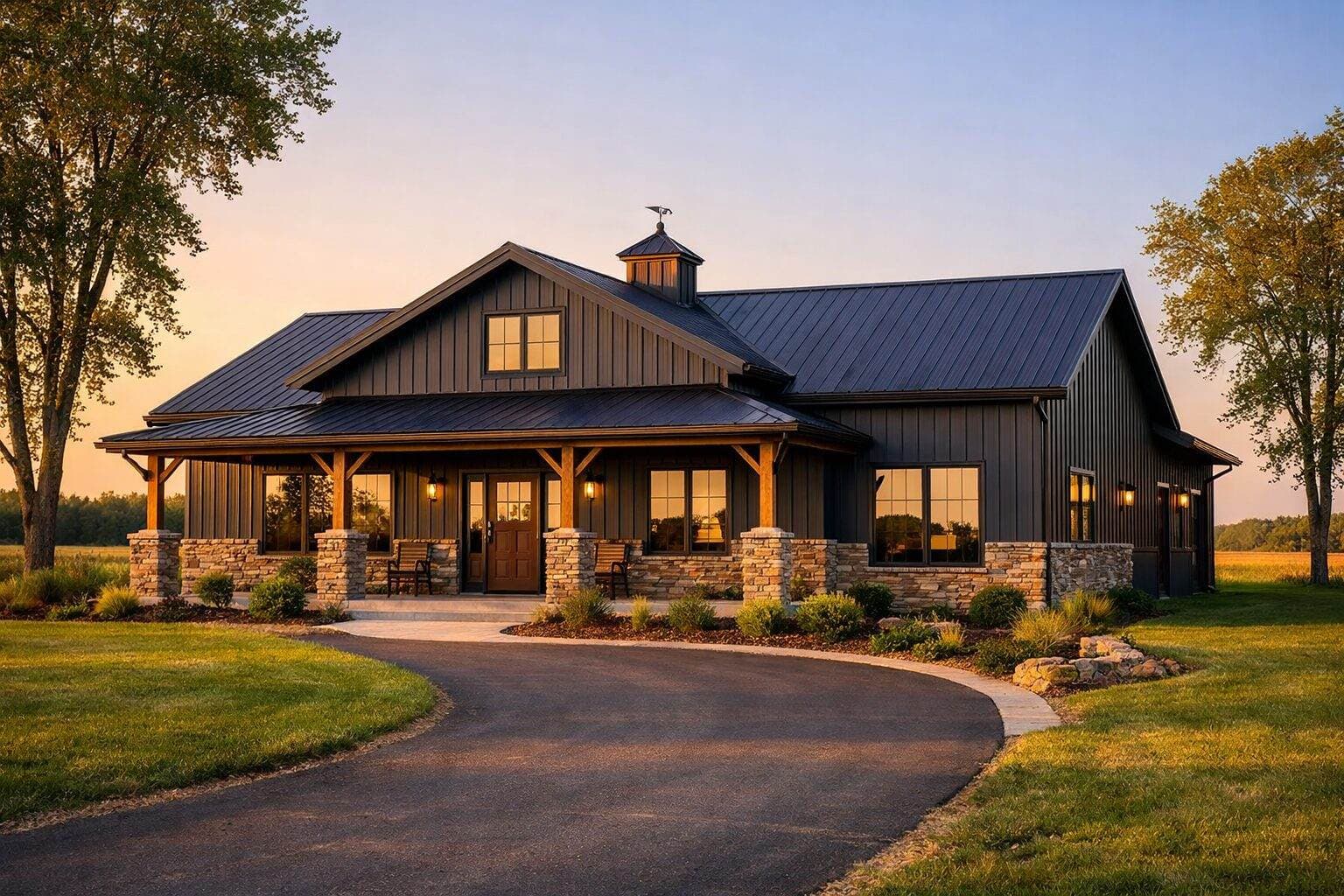
Homes
Pole Barns
General Storage & Garages
Agriculture & Machine Sheds
Commercial Buildings
She Sheds
Man Caves