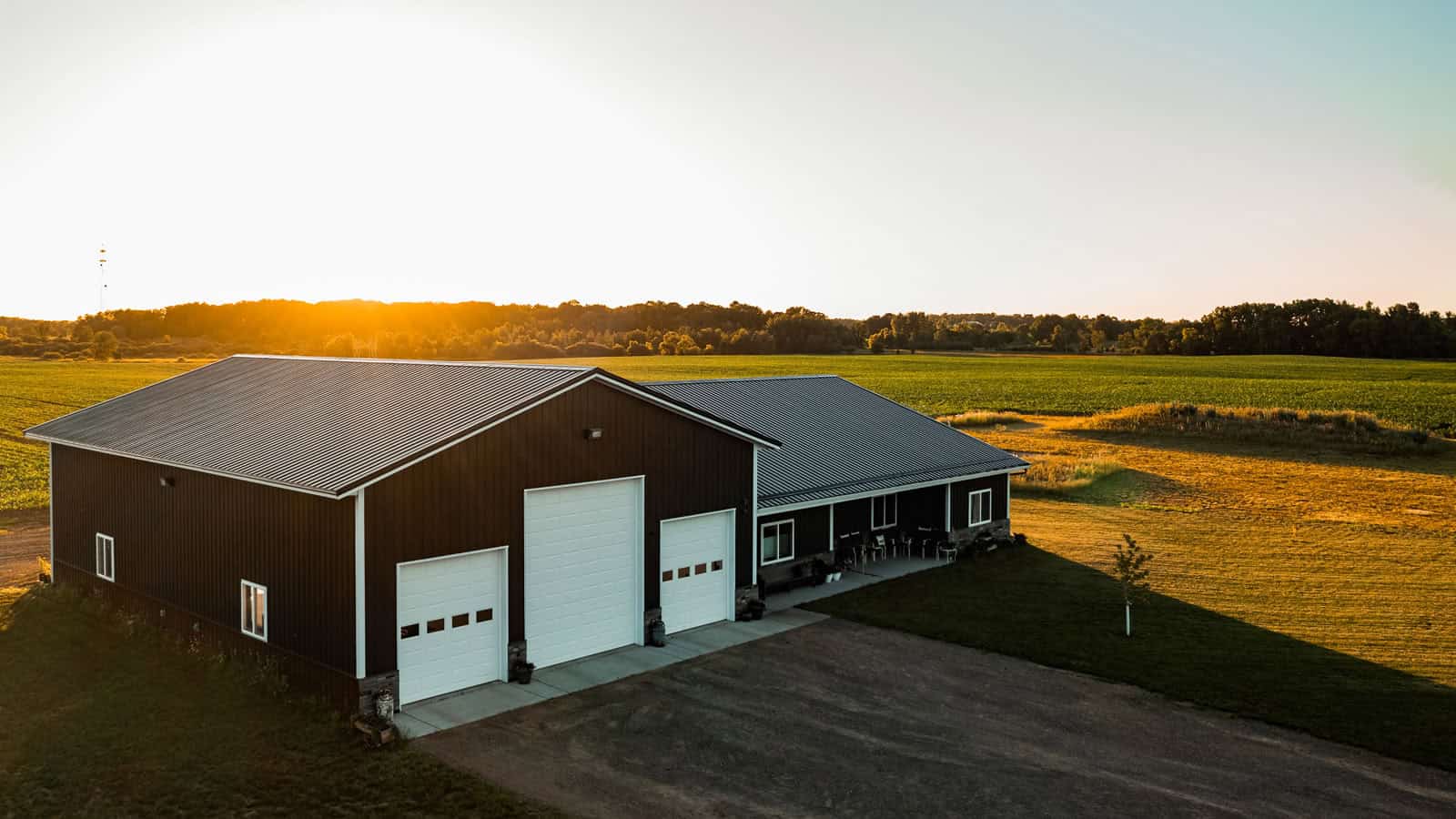

Your roof is the largest visible surface on any pole building. In the Midwest, where summers bring intense sun and winters pile on snow, the color and profile you choose affect more than curb appeal. They influence energy costs, snow shedding, and how your building ages over decades. This guide walks you through the decisions that matter most.
How Roof Color Affects Energy Performance
Dark roofs absorb more solar heat, which can raise interior temperatures during summer months. Light-colored or reflective roofs bounce sunlight away, keeping the space cooler and reducing air conditioning loads. For unheated workshops and storage buildings, this difference is modest. For barndominiums, home offices, or animal housing with climate control, the savings add up over time.
That said, very light roofs can create glare in rural settings with open terrain. The best choice balances reflectivity with visual comfort. Most Sherman Buildings customers find that neutral tones — medium grays, tans, and earth tones — perform well across seasons without the stark appearance of bright white.
Panel Profiles and Structural Performance
Metal roofing comes in several rib profiles, each with different strengths. Standing seam panels offer a clean, modern look with concealed fasteners that resist water intrusion over time. Screw-fastened through-fastener panels are cost-effective, easy to repair, and widely available in dozens of colors. The profile you choose should align with your building's architectural style, your maintenance expectations, and your budget.
Roof pitch also plays a role. Steeper pitches shed snow and rain more aggressively, which is valuable in northern climates. Lower pitches look sleek and minimize material use but may require more attention to sealing and drainage details. Your Sherman Buildings project manager will recommend a pitch based on your location, building width, and snow load requirements.
Matching Your Property and Neighbors
A pole building should complement its surroundings, not clash with them. If your property includes existing outbuildings, consider whether you want the new structure to blend in or stand out as a focal point. Earth tones — forest green, burgundy, tan, and charcoal — tend to harmonize with Midwest farmland and wooded lots. For residential barndominiums, matching or coordinating with your home's roof color creates visual continuity.
Many municipalities and rural associations have aesthetic guidelines. Check whether your area has restrictions on building color or roof reflectivity before making a final selection.
Warranties and Long-Term Value
Premium metal roofing carries paint warranties ranging from 25 to 40 years against chalking, fading, and peeling. The substrate beneath the paint — typically Galvalume-coated steel — resists corrosion far longer than traditional galvanized products. When you compare roofing options, look at the full warranty package, not just the color chart. A slightly higher upfront cost for a longer-lasting finish often pays for itself in reduced maintenance and better resale value.
Color Trends in 2026
Neutral palettes continue to dominate Midwest pole building design. Charcoal and dark bronze remain the most requested roof colors for both residential and agricultural buildings. For customers seeking contrast, two-tone schemes — a darker roof with lighter wall panels — add depth without looking busy. Natural wood accents on porches or entryways pair especially well with slate gray or evergreen roofs.
Frequently Asked Questions
Does a darker roof really make the building hotter inside?
In uninsulated buildings, the effect is noticeable on the hottest summer days but rarely makes the space unusable. In insulated or climate-controlled buildings, the impact is more significant. If energy efficiency is a priority, choose a lighter color or add reflective insulation beneath the roof panels.
Can I change the roof color later?
Repainting metal roofing is possible but requires specialized coatings and surface preparation. It is generally more cost-effective to choose a color you will be happy with for the long term than to plan on repainting. Most metal roof finishes last 30 years or more with minimal fading.
What roof pitch works best for heavy snow?
Steeper pitches shed snow more effectively. Agricultural and commercial buildings in snow-prone regions often use 4:12 or steeper pitches. Your local building code and snow load requirements will influence the minimum pitch for your project. Sherman Buildings engineers each roof system to match the snow loads in your county.
Is standing seam worth the extra cost?
Standing seam roofs offer superior weather resistance and a premium appearance. The concealed fastener system eliminates the penetration points found in screw-fastened panels, reducing the risk of leaks over decades. For residential barndominiums and high-end workshops, the upgrade is often worth it. For basic storage or equipment sheds, exposed-fastener panels provide excellent value.
How do I see color samples before deciding?
Sherman Buildings provides physical color chips and digital renderings during the design phase. We recommend viewing samples outdoors in natural light, since indoor lighting changes how colors appear. You can also visit completed projects in your area to see how specific colors age.
Start Designing Your Roof
The right roof protects your investment and defines how your building looks for decades. Contact Sherman Buildings to review color options, panel profiles, and roof pitches tailored to your property and climate. Our team will help you balance performance, aesthetics, and budget into a roof you will be proud to look at every day.