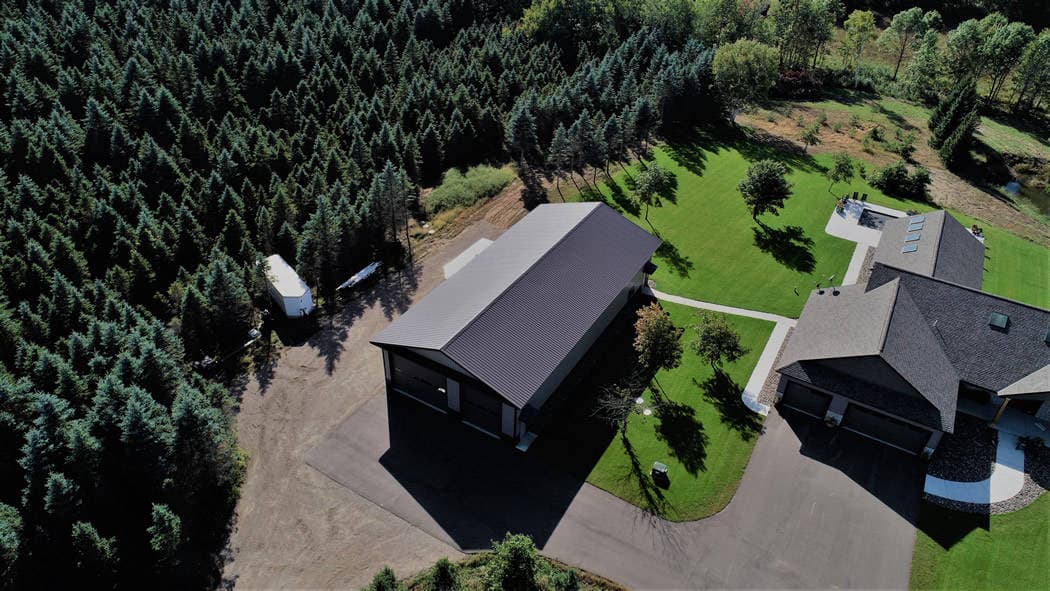

Minnesota winters are not forgiving. A pole building that looks fine on paper can fail under the weight of a heavy snowpack, or the pressure of a straight-line windstorm, if it was not engineered for local conditions. The state publishes specific ground snow load and design wind speed values by county and by risk category. Understanding those values, and where they come from, is how you ask the right questions before you sign a contract and sleep soundly after the building is up.
Minnesota Ground Snow Load by County
Minnesota does not interpolate snow load from a contour map. Under Minnesota Rule 1303.1700, the state assigns a flat ground snow load value to each county. Twenty-nine northern and central counties, including Aitkin, Becker, Carlton, Cass, Crow Wing, Itasca, Kanabec, Mille Lacs, Morrison, Otter Tail, Pine, St. Louis, Todd, and Wadena, carry a ground snow load of 60 pounds per square foot. Every other county in the state carries 50 psf.
The design flat-roof snow load, which is the number engineers actually use to size trusses and fasteners, is 70 percent of the ground value under Minnesota Rule 1309.0301 and ASCE 7-16. That works out to 42 psf across the 60 psf counties and 35 psf across the 50 psf counties. University of Minnesota Extension states the same 42 and 35 psf figures in its farm safety guidance on preventing roof collapse. A slope factor, thermal factor, and exposure factor may raise or lower that number for your specific roof, but the ground snow load is the starting point.
Minnesota Design Wind Speed
Design wind speed in Minnesota is 115 miles per hour statewide for Risk Category II construction, measured as a 3-second gust at Exposure C under Minnesota Rule 1309.0301. Common Upper Midwest references from before 2012 gave wind speeds in the 90 to 100 mph range; those older figures were nominal wind speeds and are not comparable to the current strength-level design speeds. If a builder quotes you a 90 mph wind rating for a Minnesota building today, ask which code cycle they are using.
Risk Category matters. An agricultural building analyzed as Risk Category I generally designs to a lower wind speed, which is what USDA NRCS prescriptive guidance uses. A residential barndominium is Risk Category II and gets the full 115 mph. In open rural terrain, where pole buildings typically sit, Exposure C applies because there is little upwind to slow airflow. Both uplift, which tries to peel the roof away, and lateral pressure, which pushes walls inward or outward, are calculated from that wind speed.
Frost Zone and Footings
A roof engineered for heavy snow is only as strong as the foundation holding it up. Minnesota Rule 1303.1600 sets minimum footing depth for frost protection by zone. Frost Zone I, which covers most of central and northern Minnesota including Kanabec, Crow Wing, Itasca, Pine, and St. Louis counties, requires footings to 5 feet, or 60 inches. Frost Zone II, which covers the southern counties and the Twin Cities metro, requires 3 feet 6 inches, or 42 inches.
Post-frame buildings transfer load through individual footings under each column, but Minnesota's code treats an embedded wood column under the same frost and bearing rules as any other foundation element. There is no separate pole barn embedment rule, so depth is an engineered value based on soil bearing capacity, wind uplift, and lateral load. The National Frame Building Association's accepted practices require posts to be set to at least 90 percent of the specified depth, within 2 inches of the designed on-center spacing.
Permits and Stamped Engineering Drawings
Every county in Minnesota enforces the state code. When you apply for a building permit, the plan examiner reviews your engineered drawings to confirm they meet the ground snow load, design wind speed, and frost depth for your site. If the plans do not show adequate load capacity, the permit is denied until corrections are made.
Sherman Buildings provides stamped engineering drawings with every project. Those drawings include truss calculations, connection details, and footing specifications that satisfy permit requirements in Minnesota and surrounding states. Working with an engineer from the start prevents costly redesigns and construction delays, and it gives you a document your insurer, appraiser, or future buyer can rely on.
Practical Steps to Protect Your Investment
Beyond engineering, a few practical habits reduce risk during extreme weather:
- Keep gutters and roof drains clear so meltwater flows away from the building.
- Trim overhanging tree branches that could fall on the roof during ice storms.
- Inspect the roof after severe storms for panel displacement or fastener loosening.
- Avoid adding unplanned loads like heavy equipment storage in lofts without engineering review.
- If snow accumulates beyond the roof's design load, contact a structural engineer before attempting removal. University of Minnesota Extension warns that improper removal can damage the roof.
Frequently Asked Questions
How do I know what snow load my county requires?
Minnesota Rule 1303.1700 assigns each county a flat ground snow load: 60 pounds per square foot in 29 northern and central counties, 50 psf everywhere else. The design flat-roof snow load is 70 percent of that value under Rule 1309.0301, so 42 psf across the north and 35 psf across the south. Your county building department will confirm the value that applies to your site, and Sherman confirms it during your estimate.
Can I upgrade my wind or snow load above the minimum code requirement?
Yes. Many customers choose to exceed minimum requirements for added peace of mind, especially in exposed rural locations or for buildings housing valuable equipment. Upgrading typically involves heavier trusses, additional bracing, or deeper footings. Your project manager can quote the upgrade during design.
What happens if snow accumulates beyond the design load?
Building codes include safety factors that allow structures to handle loads above the design minimum for short periods. However, repeated or prolonged overloads can cause permanent deformation. If you are concerned about heavy accumulation, consult a structural engineer before attempting to remove snow yourself, since improper removal can damage the roof.
Does insurance cover snow or wind damage to a pole building?
Most farm and homeowner policies cover storm damage, but coverage limits and deductibles vary. Some insurers offer lower premiums for buildings with engineered wind and snow ratings. Ask your insurance agent whether stamped engineering drawings qualify you for a discount.
How does post-frame construction compare to steel or stick-built for snow and wind?
Properly engineered post-frame buildings perform as well as steel or stick-frame structures in snow and wind events, because all three are designed against the same code loads. The National Frame Building Association's accepted practices govern post placement, embedment, and connection detailing to ensure post-frame achieves the same performance. The critical factor is engineering quality, not the framing system itself. Post-frame's typical advantages are wider clear spans and lower material cost for the same code compliance.
Build With Confidence This Winter
Snow and wind are facts of life in the Upper Midwest, but a pole building engineered to the correct county snow load, statewide design wind speed, and frost zone footing depth handles both without worry. Contact Sherman Buildings to review those values for your site, and let us design a structure that protects what matters most, whatever the weather brings.