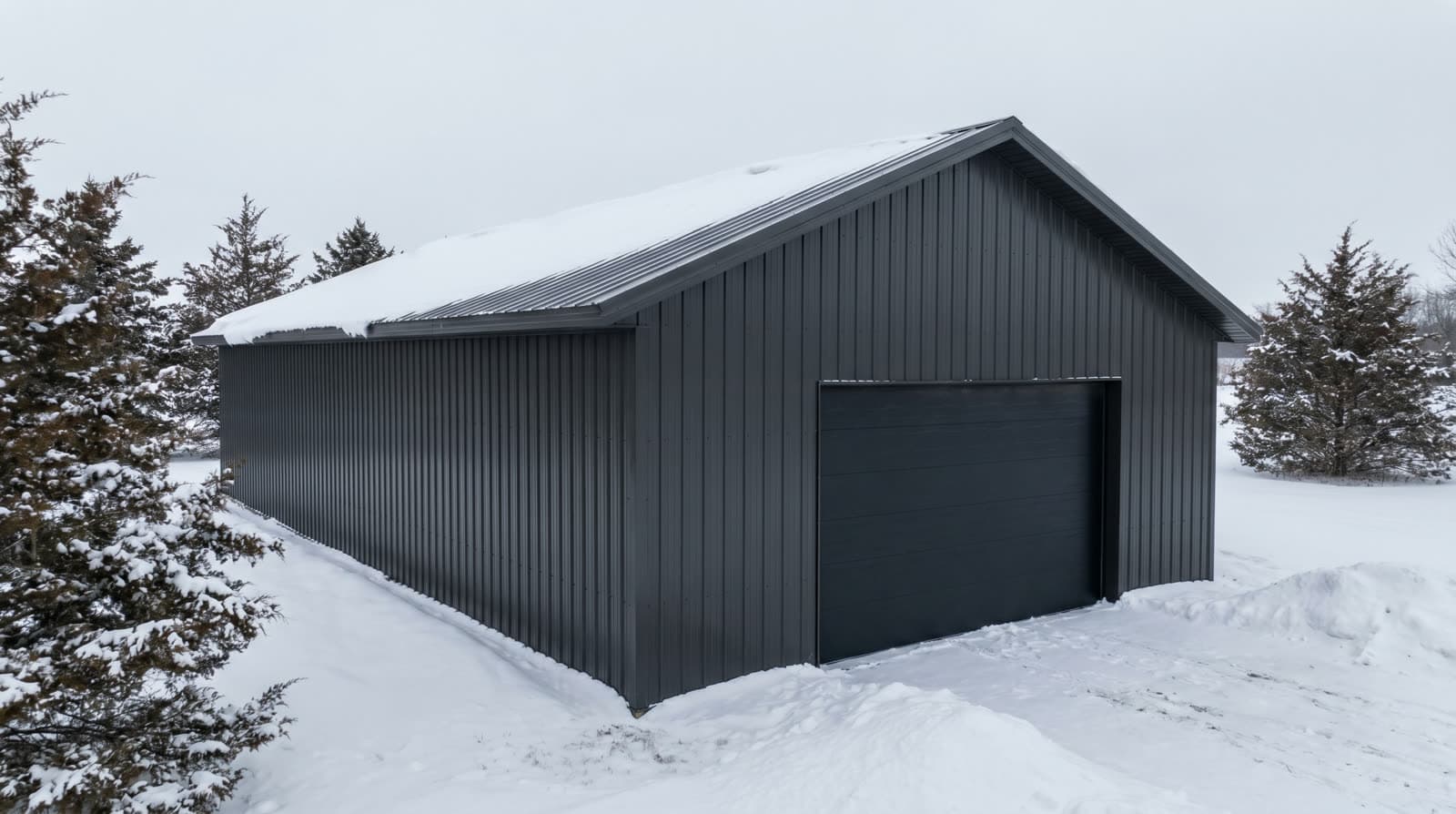

Every Minnesota winter brings the same question to pole barn owners: should I get that snow off the roof? Most of the time, a well-engineered post-frame building can carry the snow it was designed for, and steel roofs shed a lot of it on their own. But heavy storms, drifting, ice, and rain on top of snow can push a roof past what it was built to handle. This guide explains how to judge when snow is a problem, what warning signs to watch for, and how to remove it safely without hurting yourself or your building.
How Much Snow Is Too Much for a Pole Barn Roof?
There is no single number that fits every building. How much snow a roof can carry depends on its engineered design load, its pitch, its condition, and what kind of snow is sitting on it. Your building's design snow load should appear on its engineered drawings, and that is the best starting point for any decision.
University of Minnesota Extension notes that many agricultural buildings are built for a 20 pounds per square foot snow load, which would be expected to handle about four feet of dry snow or two feet of wet, heavy snow and ice. Extension engineers add that in most cases, farm buildings will have an excessive snow load if there are more than four to six feet of snow on the roof. Newer, engineered buildings in our area are often designed for more than that, which is one more reason to check your drawings.
Not All Snow Weighs the Same
The weight of snow changes dramatically with its moisture. According to FEMA's Snow Load Safety Guide, one foot of fresh snow ranges from about 3 pounds per square foot for light, dry snow to about 21 pounds per square foot for wet, heavy snow. Ice is heavier still: one inch of ice weighs a little less than 5 pounds per square foot. The Insurance Institute for Business and Home Safety offers a handy rule of thumb that one inch of ice equals about one foot of fresh snow.
That is why a roof that handled a fluffy December storm with no trouble can be at risk in March, after several thaws, refreezes, and a late-season rain have turned the same snowpack into dense, heavy ice.
Where Snow Piles Up
Even a roof with a modest average depth can be overloaded in one spot. UMN Extension researchers found that snow buildup is affected by low roof pitch, wind drifting around buildings and trees, lean-to roofs that receive snow sliding off a higher roof, and valleys that collect snow. In east-central Minnesota, where our service area spans Climate Zones 6A and 7, lean-tos and buildings tucked near shelterbelts deserve extra attention after a big wind-driven storm.
Warning Signs Your Roof Is Under Stress
Wood-framed post-frame buildings usually give some warning before trouble. FEMA's snow load guidance lists signs of an overstressed roof that apply directly to pole barns:
- Popping, cracking, or creaking noises from the roof or walls.
- Sagging roof lines or roof steel between purlins.
- Bowing truss bottom chords or web members.
- Doors and windows that suddenly stick or will not open or close.
- Cracked or split wood members, or new cracks in wall finishes.
- Severe roof leaks.
UMN Extension also recommends checking sidewalls for bulges or failed knee braces and looking down the roof line to see that it is still straight. If you notice any of these signs, get people and animals out of the building and do not climb onto the roof. FEMA advises contacting the local building authority or a qualified design professional for a structural inspection before anyone goes back in.
Safe Ways to Remove Snow From a Pole Barn Roof
If your roof is carrying more snow than it should and the building shows no signs of distress, the next step is getting the deepest snow off as soon as possible. UMN Extension notes that there is generally some time between a large snowfall and potential structural failure, so there is no need to rush into an unsafe method.
Work From the Ground First
A long-handled roof rake used from the ground is the safest option for most owners. OSHA guidance on rooftop snow removal recommends using methods that keep people off the roof whenever possible, such as snow rakes or drag lines from the ground. Pull snow down in small amounts at a time, and leave a thin layer of snow on the steel so the rake does not scrape or scratch the roof panels.
Keep the Load Balanced
Removing snow unevenly can create a worse problem than the one you started with. OSHA advises removing snow uniformly across the roof and avoiding snow piles on the roof. On a gable roof, that means working both sides rather than clearing one side completely while the other stays loaded.
Know When to Call a Professional
If snow cannot be reached from the ground, UMN Extension's first recommendation is to hire a professional if possible. Snow-covered steel is extremely slippery, and the added weight of a person and equipment concentrates load on an already stressed roof. Anyone who must go up should use proper fall protection, and OSHA warns against using a snow rake or shovel while standing on a ladder.
Mistakes That Damage Roofs or Injure People
Most winter roof damage and injuries come from a few avoidable mistakes:
- Chipping or scraping ice. UMN Extension warns that excessive scraping or trying to chip off ice can damage the roof and lead to leaks.
- Standing in the slide zone. Steel roofs can release large sheets of snow and ice at once. OSHA recommends marking a safe zone and keeping people back about 10 feet from where snow is expected to fall.
- Working near power lines. Keep metal rakes and ladders well away from the service drop and any overhead lines.
- Using heat the wrong way. UMN Extension notes that warming a building to release snow only works in open-truss buildings with uninsulated metal roofs, takes a lot of heat, and should never involve heaters placed in an attic space.
- Entering a building that is showing distress. If the frame is creaking or sagging, stay out until it has been inspected.
Preventing Problems Before the Next Storm
The best snow strategy starts long before the first storm. A few planning steps make a big difference over the life of a building:
- Build to the right design load. Make sure your building is engineered for local snow loads and site conditions, including drifting near taller buildings or windbreaks.
- Think through roof pitch and layout. Steeper roofs shed snow more readily, and lean-tos placed below a higher roof will receive whatever slides off it.
- Plan where snow will land. Keep doors, walkways, vehicles, and livestock areas out of the path of sliding snow, and consider snow guards above entries.
- Manage windbreaks and snow fences. UMN Extension notes that properly placed snow fences and shelterbelts upwind of farm buildings can help prevent excessive snow on roofs.
- Do a fall walkaround. Check trusses, knee braces, and fasteners before winter so small issues are fixed while the weather is still mild.
What Affects the Cost of Snow-Ready Roof Design
Designing a building that handles Minnesota winters well is about choices, not a fixed number. The factors that shape the investment include the building's size and width, the engineered snow and wind loads for your site, roof pitch, truss spacing, lean-to additions, snow guards, and the location of doors relative to where snow will slide. Each project is different, so the best way to understand those trade-offs for your building is to request a quote and talk through your site with a builder.
Frequently Asked Questions
Do I need to remove snow from my pole barn roof every winter?
Usually not. Most engineered pole barns carry normal Minnesota snowfall without help, and steel roofs shed much of it. Removal makes sense after unusually heavy storms, drifting, ice buildup, or rain on snow, or if your building shows signs of stress.
How do I know how much snow my pole barn was designed for?
Check the building's engineered drawings or truss documentation for the design snow load. If you cannot find it, contact the original builder or a qualified design professional.
Is it safe to climb onto a snowy pole barn roof?
It is risky. Snow-covered steel is very slippery, and your weight adds to the load. UMN Extension and OSHA both recommend working from the ground when possible and hiring a professional for roof work.
Can I use a metal shovel or chip off the ice?
Avoid it. Scraping and chipping can damage steel panels, fasteners, and finishes, which leads to leaks. Use a roof rake designed for the job and leave a thin layer of snow on the roof.
What should I do if my pole barn starts creaking under snow?
Get people and animals out, stay off the roof, and have the building inspected by the local building authority or a qualified design professional before anyone goes back inside.
Plan a Winter-Ready Building With Sherman
The safest snow plan is a building that was designed for Minnesota winters from the start. If you are planning a pole barn, shop, or post-frame home in Kanabec, Pine, Mille Lacs, Isanti, Chisago, or Aitkin County, stop by our Mora office or request a free, no-pressure quote. We are happy to walk through snow loads, roof pitch, door placement, and the details that help your building handle winter with less worry.