Frequently Asked Questions
Answers to the most common questions about pole buildings, modular homes, and barndominiums.
Quick answer
Post-frame (pole barn) construction uses engineered, pressure-treated ground-contact columns set on frost-depth footings instead of a continuous foundation wall, which is what makes it faster to put up and more cost-effective per square foot than stick framing while allowing wide clear-span interiors with no interior columns. Sherman Buildings has built post-frame structures since 1976 across Minnesota and Northwest Wisconsin, engineering every building to the specific snow and wind loads for its site rather than to a generic regional default. Buildings can be left as a shell or finished turnkey, including insulation, wiring, plumbing, and HVAC. Pricing is quoted per project after reviewing your site, size, and finish level.
Everything You Need to Know
We know that choosing the right building or home is a big decision. Below you’ll find answers to the questions we hear most often — organized by topic so you can find what matters to you quickly. If your question isn’t covered here, give us a call at (320) 679-3438 or reach out by email.
Jump to a Topic
The most-asked topics have full guides. Open one for the complete answer, or browse every question in the categories below.
General
What states do you build pole barns in?
We build primarily in Minnesota and Northwest Wisconsin from our Mora headquarters and sales office, with our Floodwood distribution center and contractor hub where crews pick up tools and materials before heading to northern Minnesota project sites. Sherman crews have extensive experience across varying upper Midwest conditions and adhere to all local building codes and regulations.
How long will construction take for my pole building?
Timeline varies based on building size, customization details, and weather. A typical standard pole building is completed within about a week; more complex structures take longer. We provide estimated timelines during the planning phase.
Do I need a permit to build a garage or pole building on my property?
Yes, permits are generally required. Specific requirements vary by location — local zoning laws, setback requirements, and snow-load considerations all matter. We can help guide you through the process for your jurisdiction.
What is your license number and are you insured?
Our Minnesota state license number is BC004619, and we are fully insured to protect clients from unforeseen circumstances on every project.
Can I put something on the walls besides steel?
Yes. You can choose any finishing materials, including vinyl siding, cedar, brick, or stucco depending on aesthetics and functional needs.
Can I put something on the roof other than steel?
Yes. Asphalt shingles, cedar, or other materials work well. Steel is recommended for durability and cost efficiency, but alternatives mimicking traditional shingles or slate are available.
What is the smallest building that Sherman can construct?
We generally start at 20x24 and up; the most common size is 30'x40'. Custom smaller dimensions are possible. Pre-built “Little Shermies” are also available.
Do you do concrete slab work?
We typically refer to quality concrete contractors, who can be contacted directly or through Sherman to ensure a sturdy, reliable foundation for your building.
Are pole buildings cheaper?
Pole buildings tend to be more cost-effective than alternatives with fewer materials and labor costs. For buildings wider than 80', other construction methods may be more effective.
What experience do your crews have?
Many crew members have over 15 years of experience, and our owner has more than 30 years of experience working on construction daily.
Who constructs Sherman pole buildings?
Sherman directly employs its crews, who work year-round in Minnesota and Northwest Wisconsin. This direct employment model lets us maintain consistently high quality levels on every project.
Is this a good option if I already own land?
Yes. Having land is a great head start. We can help you evaluate the site and determine the best placement and orientation for your new building or home.
Cost & Pricing Factors
How much does a pole barn cost in Minnesota in 2026?
There is no honest price-per-square-foot shortcut. Minnesota pole barn cost is driven by size and span, sidewall height, concrete, doors, insulation, snow and wind load, site access, and permits. Sherman quotes every building to your specific site.
What drives the cost of a barndominium in Minnesota?
Shell size, foundation, interior finish level, an attached shop, utilities, insulation, mechanicals, and timeline all drive the number. Finished living space costs more per square foot than shop space. Sherman quotes to the site rather than a flat rate.
What is the smallest building Sherman will build?
The typical minimum is 20x24, and the most common size is 30x40. Smaller pre-built “Little Shermies” are also available. The right size depends on your use, your site, and your budget.
Are pole buildings cheaper than other construction methods?
Post-frame pole buildings are generally more cost-effective than alternatives thanks to fewer materials and faster labor. For buildings wider than about 80', other construction methods may be more appropriate. Cost always depends on your finish level and site.
Permits & Code (MN & WI)
Do I need a permit for a pole barn in Minnesota?
Yes, in almost all cases. Requirements vary by county and jurisdiction — zoning, setbacks, and snow-load engineering all factor in. Sherman helps guide you through the local permit process.
How do pole barn permits differ between Minnesota and Wisconsin?
Code adoption, permitting authority, and inspection steps differ between the two states, especially at the county level. Sherman builds in both and knows the differences.
Does Sherman help with the permit process?
Yes. Sherman helps guide you through local zoning, setbacks, and snow-load requirements for your jurisdiction, so the permit step does not stall your project.
Snow Load, Wind & Engineering
What snow load does a pole barn need in Minnesota?
Most southern Minnesota counties default to a 50 psf ground snow load; northern counties require 60 psf. Ground snow load (in pounds per square foot) is the maximum accumulation a region can statistically expect. Sherman engineers every building to the local requirement.
How is roof snow load different from ground snow load?
Roof load differs from ground load based on how roofs shed snow, wind exposure, and whether the building is heated or unheated. Engineering accounts for all three.
Are Sherman buildings engineered for wind as well as snow?
Yes. Every building is engineered to the wind and snow loads required for its location, using treated ground-contact columns, engineered trusses, and steel roofing built to withstand upper-Midwest conditions.
Financing
Can you finance a pole barn or barndominium?
Yes. Sherman works with partner lenders including Acorn Finance and HFS Financial, which offer products set up for post-frame buildings and homes. A code-built, permitted barndominium can be financed as a residence.
Can you get a mortgage on a pole barn home?
Yes, when it is built on a permanent foundation and permitted as a single-family residence. Sherman works with lenders who have products set up for post-frame homes and can walk you through the paperwork lenders ask for.
Insulation & Interior Finishing
Can a pole barn be insulated as well as a regular house?
Yes, and often better. Post-frame walls have deep cavities — frequently 8 to 12 inches — that hold far more insulation than a standard stud wall. Combined with a good vapor barrier and a sealed envelope, a post-frame home heats economically through a Minnesota winter.
What are my options for finishing the inside of a pole building?
Interiors can be finished to any level — insulation, drywall or steel liner, concrete, mechanical rough-ins, and full living-space finishing. Sherman guides you from an exterior shell all the way to a move-in-ready interior.
Timeline & Build Process
How long does it take to build a pole barn in Minnesota?
A typical standard pole building is completed in about a week once on-site; more complex structures take longer. Timelines vary with size, customization, permits, and weather. Sherman provides estimated timelines during the planning phase.
How does the Sherman quote process work?
Sherman explains what information is needed up front and walks you through each step, from initial contact to a site-specific quote. The fastest way to start is the Get Started flow below, or call (320) 679-3438 during business hours.
What should I have ready before requesting a quote?
It helps to know your intended use, a rough size, and your site or address so snow and wind loads can be factored in. If anything is undecided, that is fine — Sherman talks these variables through early so there are no surprises.
Pole Sheds & Storage Buildings
What is a pole building?
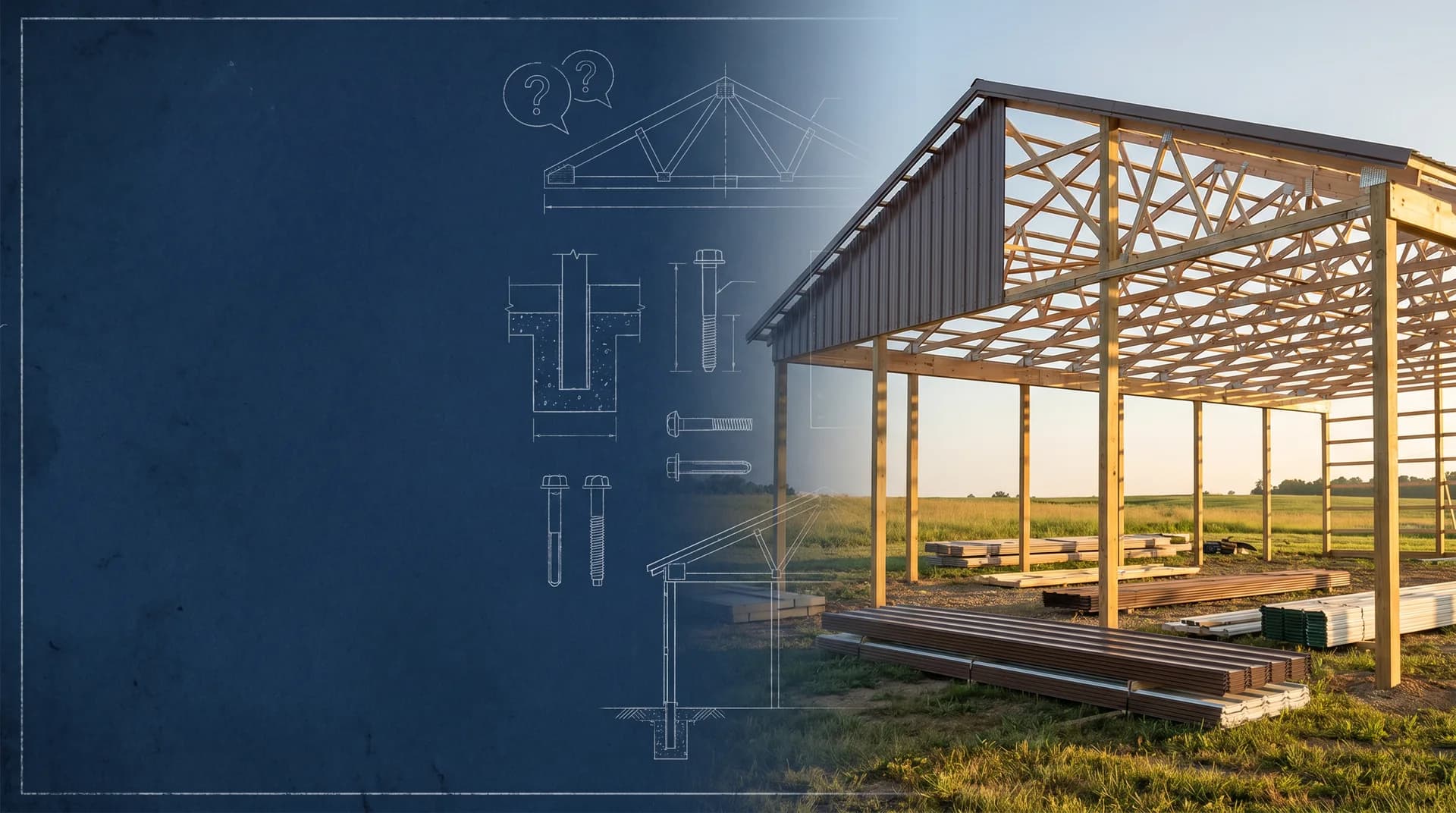
Posts are set five feet underground and placed four to eight feet apart to provide the structural frame. Trusses and purlins attach to the posts. Girts attach to the posts for siding attachment. Steel attaches to the girts and purlins, creating a sturdy, cost-efficient system.
What types of storage buildings does Sherman construct?
We specialize in pole barn garages, workshops, vehicle storage buildings, and large commercial storage facilities. Each is customized to purpose, space needs, and budget.
How much does it cost to build a storage pole building or garage?
Costs vary based on building size, materials, and customization. We provide transparent pricing during consultations, with multiple configuration options to fit different budgets.
What customization options are available for storage pole barns?
Options include post types, truss spacing, window and door styles, overhead doors (insulated or non-insulated), ventilation features, wainscoting, roof upgrades, and structural enhancements.
How durable are Sherman pole barn garages?
Our buildings are engineered for long-term durability using treated posts, high-quality steel siding and roofing, and engineered trusses. They are designed to withstand local weather including wind, snow, and temperature extremes.
Can Sherman help me design my storage building?
Yes. We guide you through the entire design process, from layout planning to material and feature selection. An interactive 3D designer is available to visualize and customize your project.
Do your pole barn garages come with warranties?
Yes. A 30-year limited structural warranty and 10-year workmanship warranty guarantee the quality and longevity of our buildings.
Garage Doors & Openers
What door types are available for my pole building?
Options include overhead steel garage doors with colors and windows plus polystyrene insulation, sliding doors for maximizing height, and commercial-grade, maintenance-free walk-in doors. Per Minnesota snow-load conventions, overhead doors typically go on the eave (long wall) side.
What types of garage doors are best for pole barns?
Steel and insulated doors are the most popular, providing durability and the ability to withstand weather changes and heavy use.
Are insulated garage doors worth it for pole barns?
Insulated doors improve temperature control, reduce energy loss, help protect stored equipment, and make the building quieter and more comfortable.
Do you offer garage door options that match the style of my pole barn?
Yes. A wide range of styles, colors, and finishes is available to ensure the garage door enhances both the appearance and the value of your pole barn.
Are insulated overhead or walk-in doors available for storage buildings?
Yes — both insulated and non-insulated overhead doors are available, plus maintenance-free walk-in doors in custom colors and designs for improved energy efficiency and equipment protection.
How do I choose the right garage door opener for my pole barn?
The right opener depends on door size, weight, and usage frequency. Our specialists help you select a model that delivers reliable performance, quiet operation, and appropriate power for your door.
How long does a typical garage door installation take?
Most installations are completed within a few hours, depending on door size, opener installation, and any customization.
What maintenance is required for a pole barn garage door?
Regular lubrication, balance checks, hardware tightening, and opener inspections help extend the life of the door. We recommend annual maintenance to prevent unexpected breakdowns.
Commercial Buildings
What features should I consider when designing a pole barn for my business?
Consider size and layout, door configurations, insulation and energy efficiency, ventilation and lighting, ceiling and eave heights, interior finishes, exterior aesthetics, structural upgrades, code compliance, and potential for future expansion.
What are the benefits of custom pole barn construction for residential or light commercial use?
Benefits include cost-effectiveness, faster build times, design flexibility with open floor plans, durability and low maintenance, energy efficiency, and versatility for a wide range of uses.
Pole Barn Homes
What is a pole barn house and how does it differ from traditional home construction?
A pole barn house is a post-frame home that uses widely spaced wooden posts anchored to concrete piers or foundations, allowing roof trusses to span long distances without interior support. Modern versions typically use concrete slabs and deliver open, flexible floor plans, faster construction, low maintenance, and superior energy efficiency with steel exteriors.
What customization options are available for pole barn houses?
Possibilities are extensive and include interior layouts, exterior materials (metal siding, wood, stone, composite), window and door placements, ceiling heights, and a broad range of interior finishes, allowing the home to blend with its surroundings.
What are the main advantages of building a pole barn house?
Benefits include affordability, fast construction, design flexibility with open floor plans, durability in challenging environmental conditions, and strong energy-efficiency opportunities.
What are the differences between the Envelope, Craftsman, and Turnkey options?
The Envelope package provides the exterior shell — doors, windows, siding, roofing. Craftsman adds interior work such as concrete, insulation, drywall, and mechanical rough-ins. Turnkey is a complete, move-in-ready build.
Do pole barn houses require special zoning or permits?
Yes. Local zoning regulations and building codes apply, and requirements vary by location, so consulting local authorities or a knowledgeable builder helps navigate permitting.
Can a pole barn house be used for purposes other than a residence?
Absolutely. Post-frame structures can serve as guest houses, cabins, commercial buildings, recreational facilities, educational spaces, offices, workshops, and more.
Are pole barn homes durable and energy-efficient?
Yes. They are designed to withstand harsh weather including high winds and heavy snow, and the construction method allows better insulation options — improving energy efficiency relative to some traditional homes.
Modular Homes
What is a modular home?
A modular home is a permanent, code-compliant home built in sections in a factory-controlled environment, then delivered to the site, set on a permanent foundation, and finished on-site. Once completed, it is essentially indistinguishable from a traditionally built home.
Are modular homes built to local building codes?
Yes. Modular homes are designed and constructed to meet or exceed all applicable local and state building codes, just like site-built homes (IRC/IBC).
Are modular homes lower quality?
No. Modular homes are built to the same state and local codes (IRC/IBC) as site-built homes. Because they are constructed in a controlled environment, they are often more precise and are inspected at the factory before leaving.
Are modular homes customizable?
Floor plans, layouts, finishes, and structural options can all be customized to fit your needs, style, and budget.
How long does it take to build a modular home?
Modular homes often have more predictable timelines than traditional builds. Overall build time depends on design complexity, site preparation, and finishing details, but indoor construction keeps production consistent.
Will a modular home look different from a traditional home?
Once completed, a modular home looks and feels like any other custom-built home, with the same range of exterior finishes, interior details, and long-term durability.
Who are modular homes for?
Modular homes are a great fit for retirees downsizing, first-time buyers, and anyone wanting a practical home that is easier to own and maintain.
Why are modular homes more affordable?
Indoor construction reduces material waste, limits weather delays, and standardizes steps — meaning fewer change orders and more predictable costs.
What do you mean by 'affordable to live in'?
These homes use less energy thanks to high-efficiency HVAC, quality insulation, and energy-efficient windows — translating to lower monthly bills and long-term savings.
Are modular homes a good option if I already own land?
Yes. Modular construction can significantly shorten the path to a completed home with fewer on-site delays and clearer cost control.
How is Sherman different when it comes to modular homes?
Sherman is not just selling homes — we're builders with decades of experience. We offer guidance on site preparation, foundations, subcontractors, and the full build process, so you always know what comes next.
What should buyers be aware of upfront?
Site preparation, foundation, utilities, and permits depend on your land. These aren't surprises — they're variables we talk through early so buyers understand the full picture before moving forward.
Why choose modular over a traditional build?
Modular construction offers clearer timelines, more consistent pricing, and fewer unknowns, while still delivering a durable, comfortable home that meets modern building standards.
Barndominiums & Modular/Barndo
What types of homes do you build?
We offer custom modular homes and barndominiums, with flexible design options to fit different lifestyles, property types, and budgets.
Are the homes customizable?
Yes. Layouts, finishes, and design features can be customized to match your needs, whether you are building a modular home or a barndominium.
Do these homes sit on permanent foundations?
Yes. Both modular homes and barndominiums are built on permanent foundations such as basements, crawlspaces, or slabs, depending on site conditions and design.
Are these homes energy efficient?
Yes. Both modular and post-frame construction methods allow for tight building envelopes and energy-efficient systems that support long-term performance and comfort.
Will these homes look like traditional houses?
Finished homes are designed to look and live like permanent residences, with a wide range of exterior styles and interior finishes.
Can these homes include garages, shops, or storage space?
Many homeowners choose layouts that include attached garages, workshops, or integrated storage areas — especially with barndominium designs.
Is one option better than the other?
Neither is 'better' — it depends on your goals. Modular homes often appeal to those focused on traditional layouts and efficiency, while barndominiums offer wide-open spaces and flexible live-work designs.
Can you help determine which option is right for my property?
Yes. We evaluate the site based on your goals and budget to recommend the best building approach for your project.
Still Have Questions?
Our team is happy to walk you through any details specific to your project. Get in touch for a free, no-pressure consultation.
Explore More Building Types
Sherman Buildings has been building quality post-frame structures for 50 years. Browse our full range of homes and pole buildings.
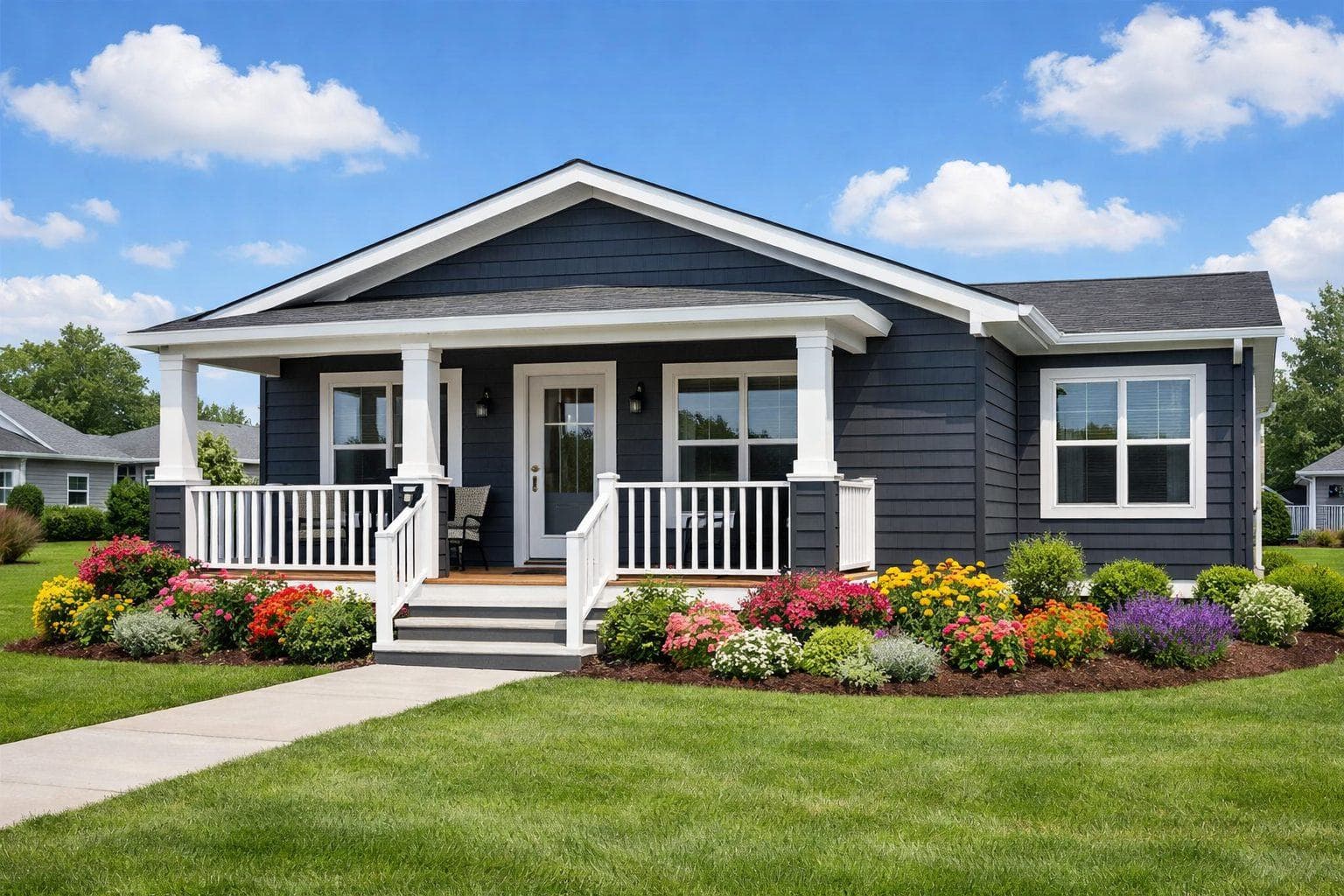
Homes
Pole Barns
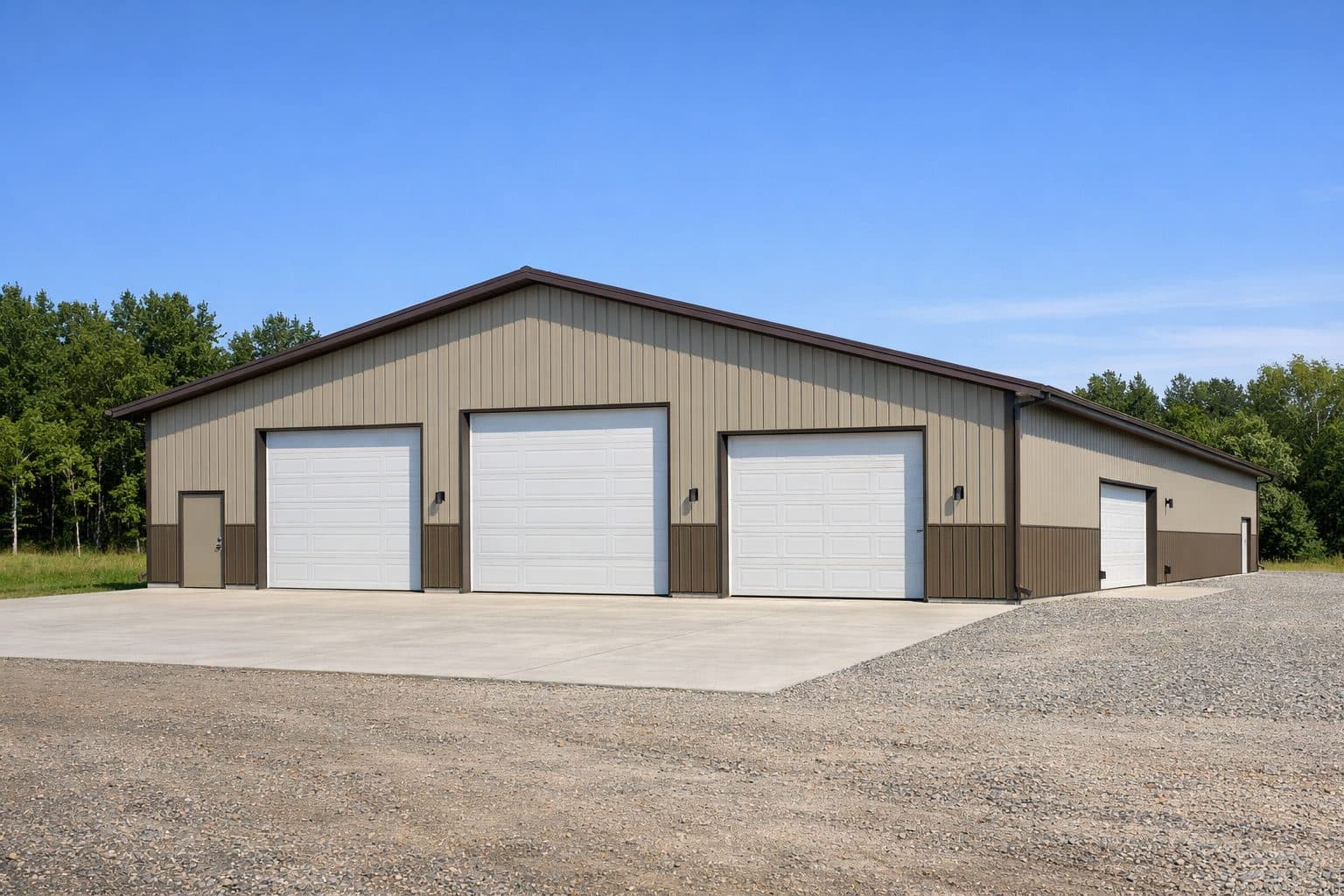
General Storage & Garages
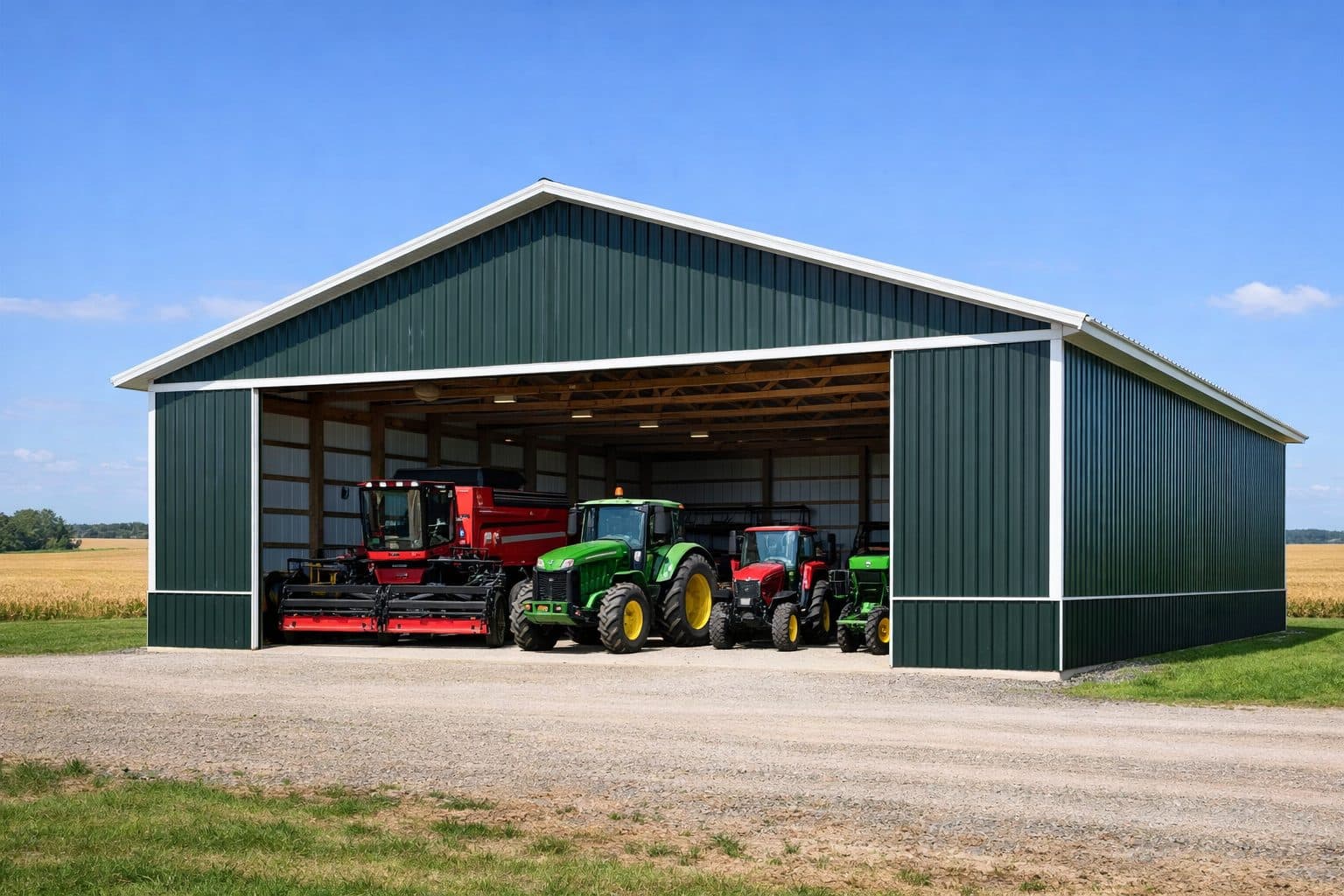
Agriculture & Machine Sheds
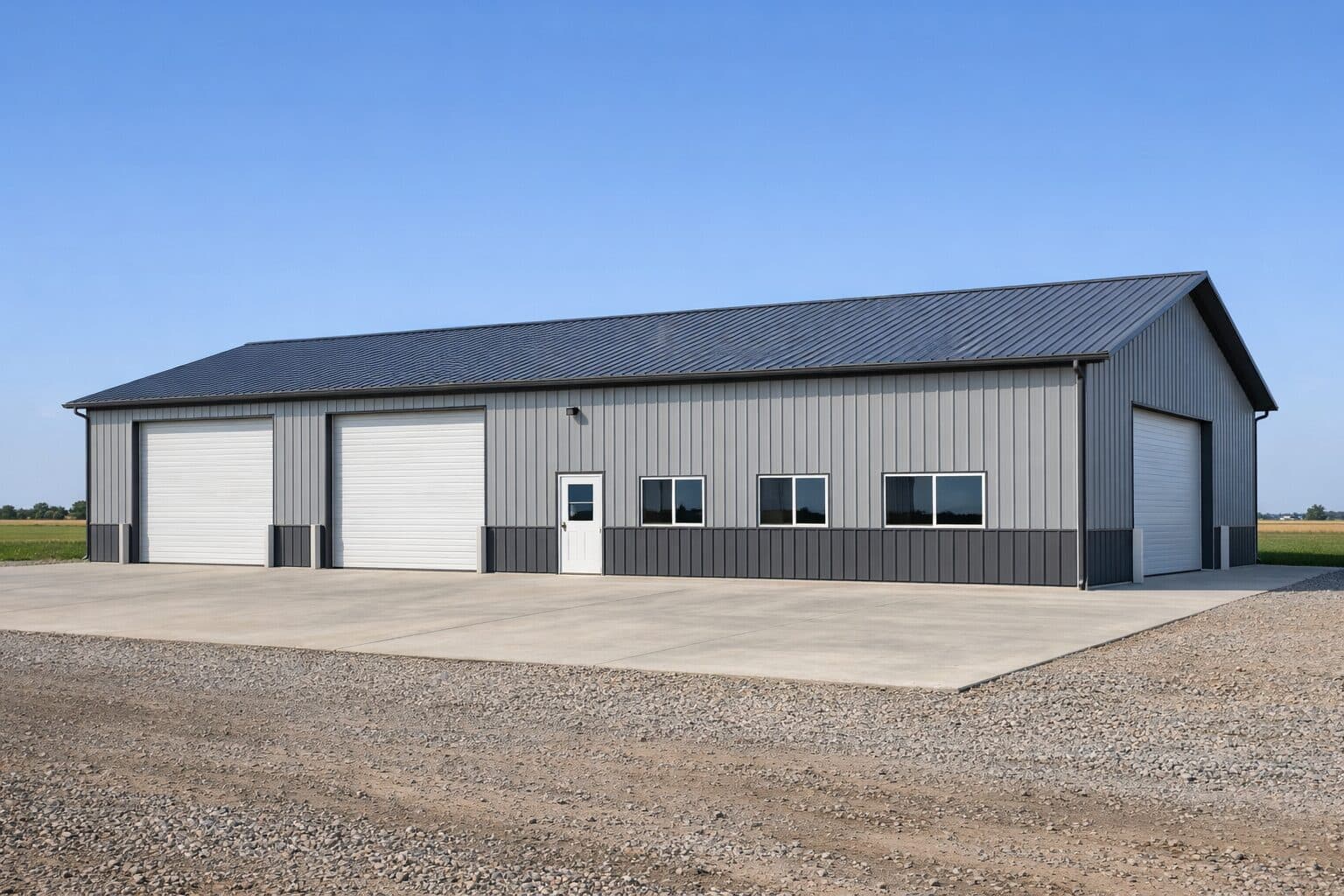
Commercial Buildings
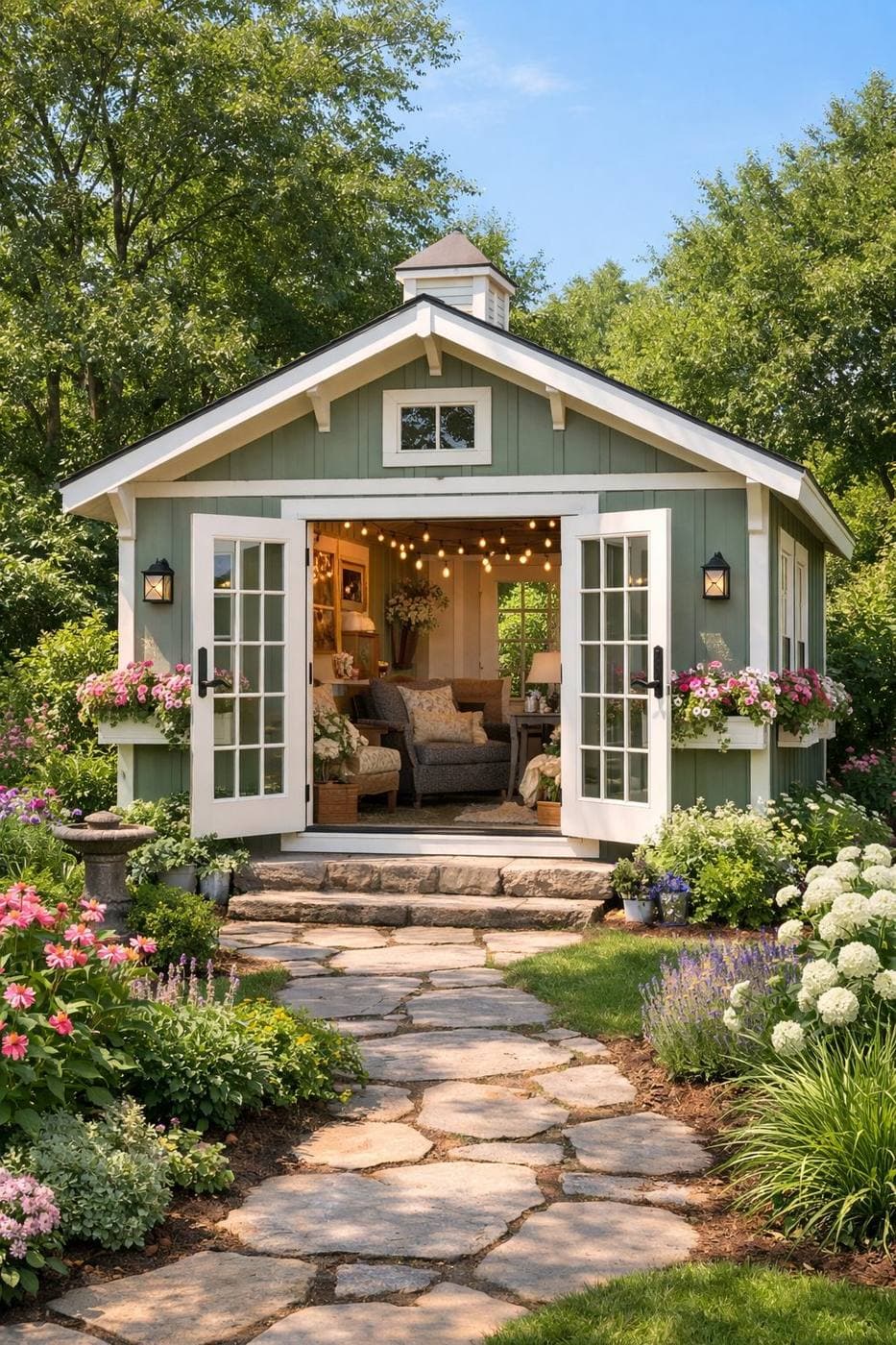
She Sheds
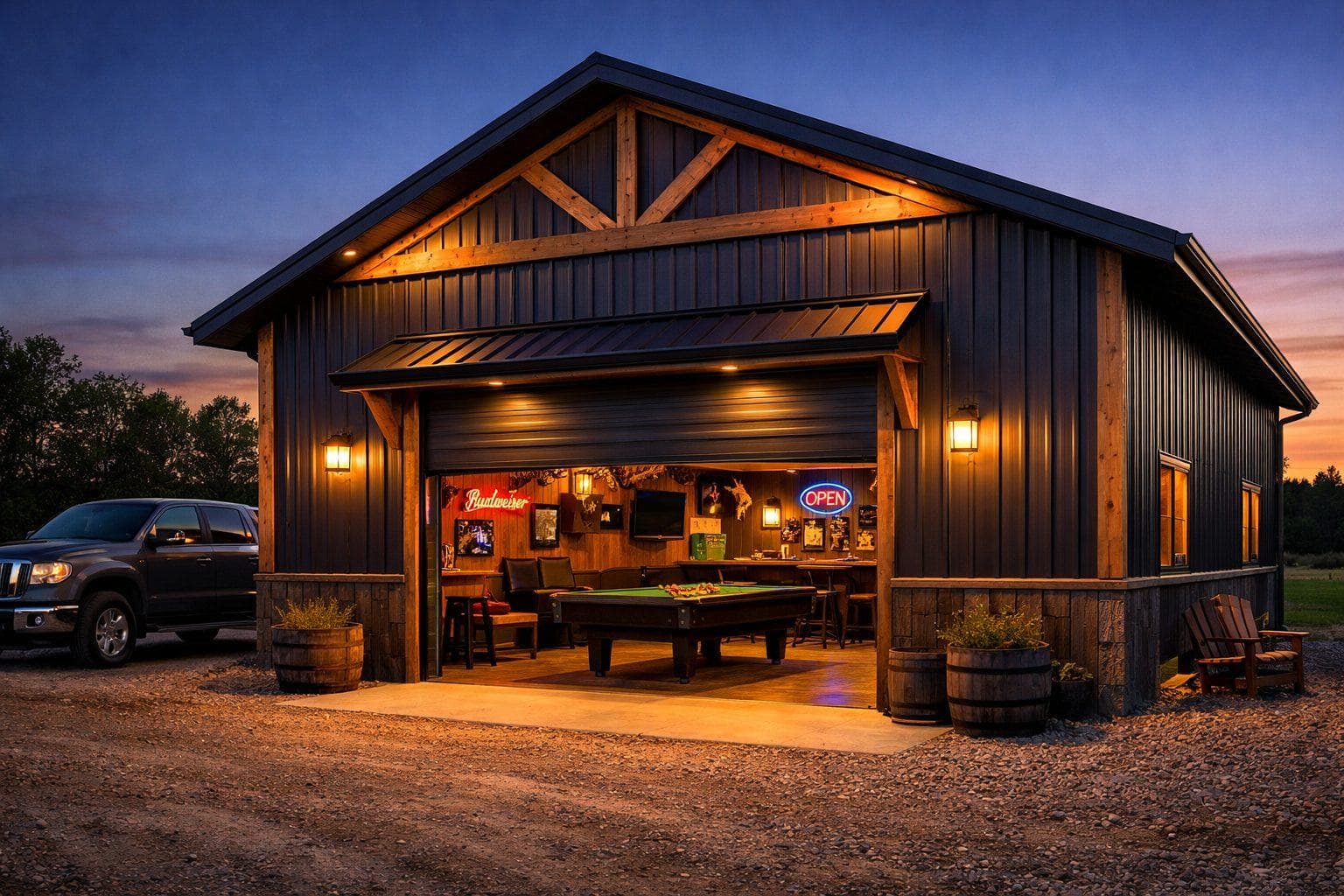
Man Caves