If you've been kicking around the idea of putting up a pole barn this summer, the first question is almost always the same: how long does this actually take? Most Minnesota property owners have a deadline in mind — a horse arriving in August, kids old enough to need a workshop, equipment that has spent one too many winters under a tarp. Knowing the realistic timeline for a 2026 summer build helps you decide when to sign, when to schedule deliveries, and when to expect doors that close behind a finished structure.
Sherman Buildings is headquartered in Mora and works across Kanabec, Pine, Mille Lacs, Isanti, Chisago, and Aitkin counties. The numbers below reflect what we typically see in those areas — your county and your specific site will shape the schedule. Here is a phase-by-phase breakdown of a Minnesota pole barn from first conversation to final inspection during peak summer build season.
The Short Answer: 6 to 16 Weeks End-to-End
For most pole barns under roughly 3,000 square feet built in our service area, the realistic end-to-end timeline runs 6 to 16 weeks from signed contract to substantially complete. The fastest projects are simple, properly engineered storage barns with permits already in hand and clear, level sites. The longest are larger custom builds with engineered plans, attached lean-tos, in-floor heat, finished interiors, or sites that need significant grading.
Industry references vary widely — some out-of-state builders quote 3 to 6 weeks, others 18 to 24 — because they're describing different scopes and different markets. In Minnesota specifically, the 6 to 16 week benchmark is consistent with what most MN-area pole barn companies publish for comparable work.
Phase 1: Design and Contract (1 to 3 Weeks)
Everything starts with a conversation about use, size, location, and how the building needs to handle Minnesota's climate loads. From there we develop a quote, finalize specifications, and put a contract in front of you.
What can speed this up
- Knowing your intended use clearly — horse barn, hobby workshop, machine shed, hay storage, or future barndominium shell.
- Having a rough site location chosen and access to setback information from your county zoning office.
- Knowing your power, water, and septic situation if you plan to finish the interior later.
What slows it down
Indecision on door sizes, color combinations, and lean-to configurations is the most common cause of delay here. Changes after engineered drawings are produced cost time. The fastest path is to walk through a completed Sherman project in person before signing.
Phase 2: Engineered Plans and Permits (2 to 6 Weeks)
Minnesota pole barns require engineered plans that meet the 2020 Minnesota Residential Code (MNRC) and applicable provisions of the Minnesota Building Code. That includes ground snow load values for our region (Climate Zone 6A/7) — your engineered roof must be designed for the local code-required load. Frost depth is another non-negotiable: footings must extend below the frost line as defined in MN Rule 1303.1600, generally 42 inches or deeper depending on county.
Permit processing varies by county. Isanti County publishes a minimum 10 working days for pole building permits, and Sherburne County publishes a similar 10-working-day minimum. Smaller townships sometimes process in a week; busier counties or projects needing a variance can run four to six weeks. Plan-review cycles are often weekly or bi-weekly — submitting Monday usually means faster turnaround than submitting late Thursday.
Common permit delays
- Setback questions from the county — distance to property lines, road right-of-way, wetlands.
- Septic-system clearances if a future barndominium use is on the table.
- First-round corrections on the engineered drawings — normal, but you must respond to every comment to avoid a second-round delay of two to three weeks.
Phase 3: Material Lead Time (2 to 6 Weeks, Often Parallel)
Pole barn components are engineered and ordered specifically for your project. Treated wood posts, dimensional lumber, engineered wooden roof trusses, metal roofing panels, sliding or overhead doors, and trim packages all have lead times that vary with the season. Late June through August is peak demand in the Upper Midwest, so order-to-delivery on roofing panels and overhead doors can stretch to four to six weeks in busy years. Material ordering usually happens in parallel with permitting so materials arrive close to your build start date — one of the bigger schedule advantages of working with an established regional builder.
Phase 4: Site Preparation (3 to 10 Days)
Before posts can go in the ground, your site needs to be cleared, graded, and a compacted gravel pad set. For a clean, level site that's already been logged or pastured, site prep can wrap up in three to five days. For wooded, sloped, or wet sites — common across our service area — expect a full week to ten days, sometimes more if substantial fill or stump removal is involved.
What site prep includes
- Clearing trees, brush, and topsoil down to load-bearing subgrade.
- Cutting and filling to establish a level pad with positive drainage away from the building footprint.
- Importing and compacting Class 5 gravel or equivalent base material.
- Staking the building corners and confirming setbacks one more time with the county before posts go in.
Phase 5: Construction (1 to 3 Weeks for Most Builds)
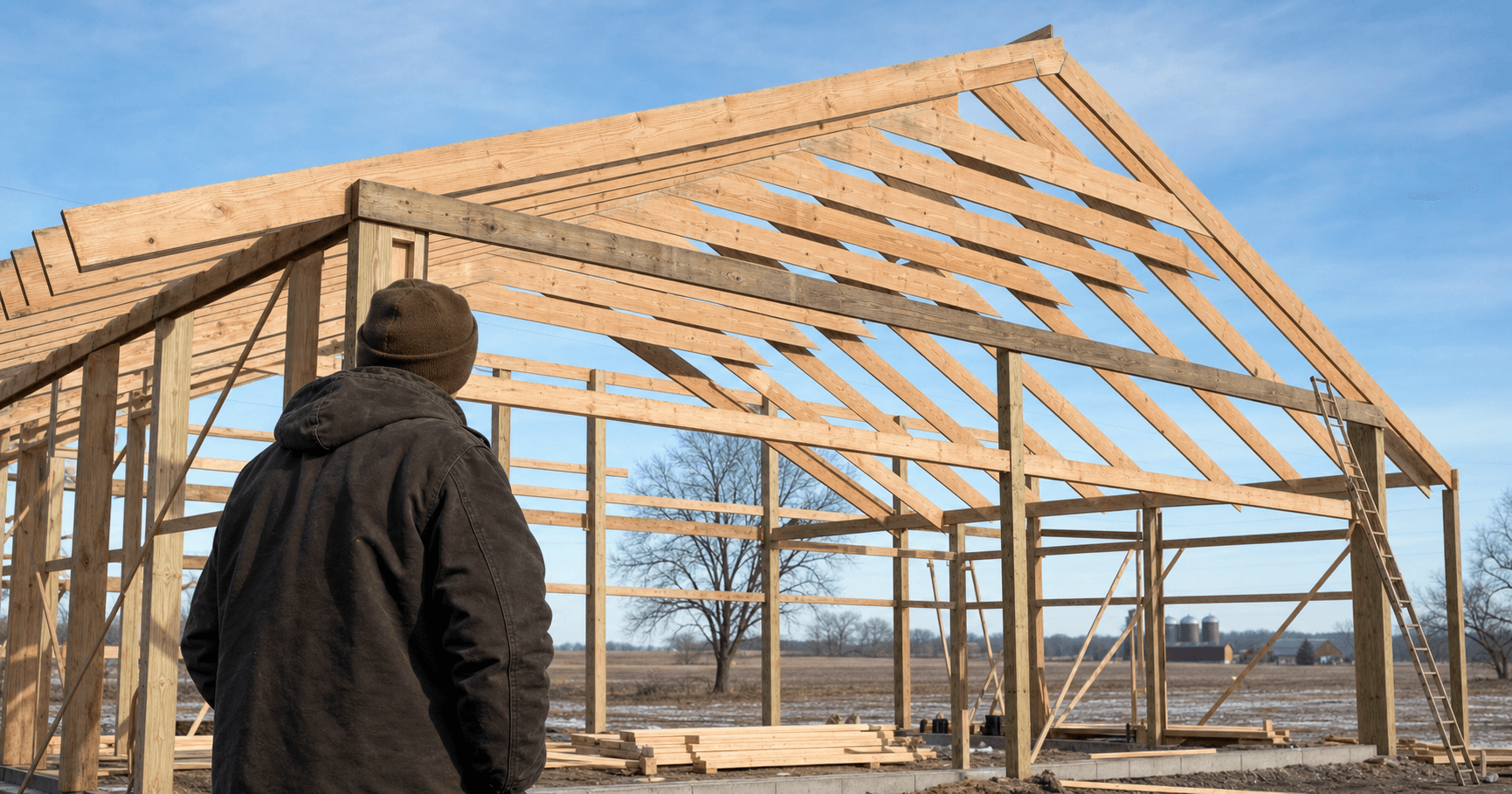
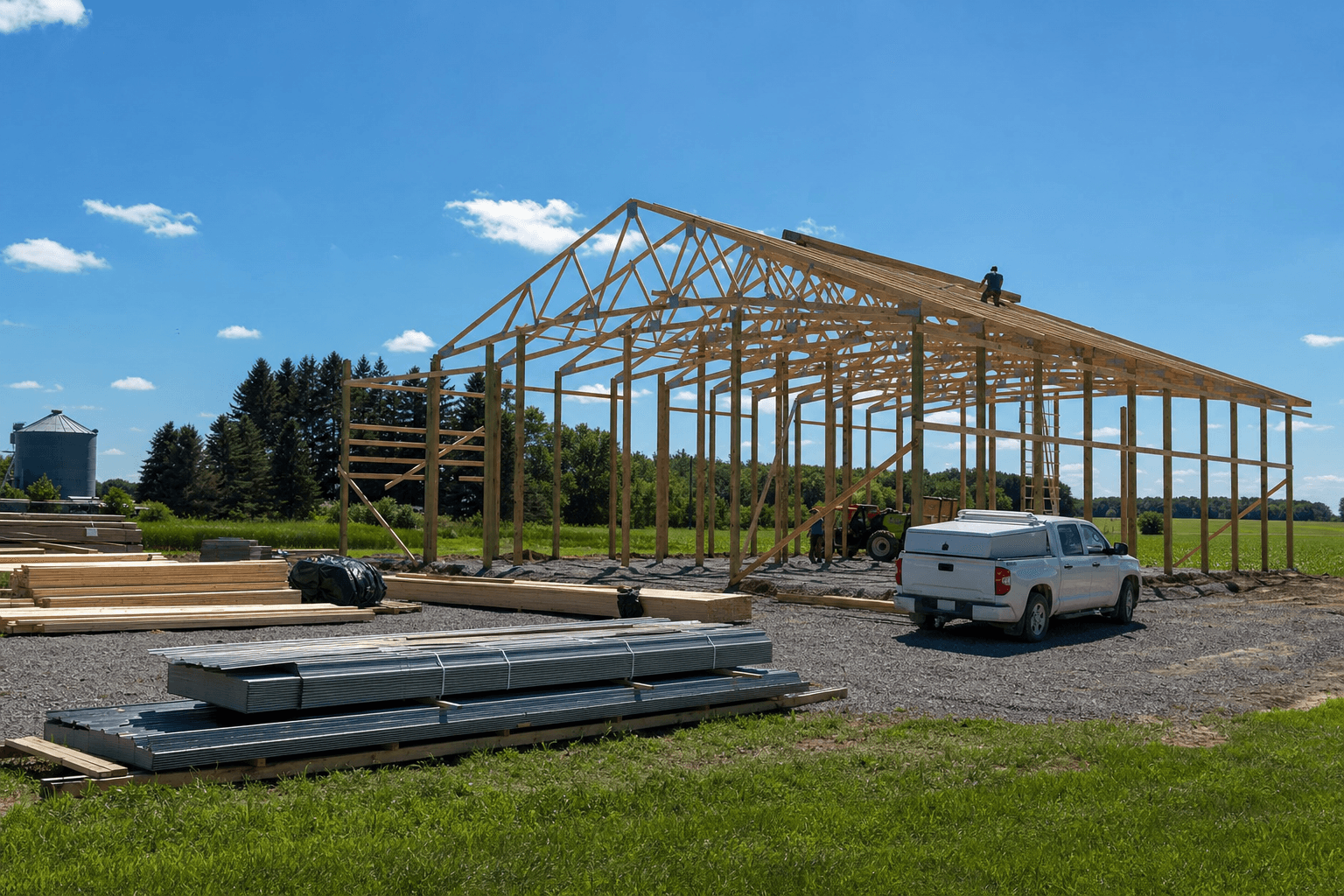
This is the part most owners look forward to. Once site prep is done and materials are on the ground, the structure itself goes up faster than people expect. A small barn (24×24) can be framed and dried in by a professional crew in two to five working days. A typical 40×60 builds in roughly 5 to 10 working days. Larger custom buildings with multiple lean-tos, dormers, or finished sections run 10 to 20 working days for the shell.
Typical construction sequence
- Days 1–2: Holes augered below frost line, treated wood posts set and braced.
- Days 3–5: Skirt boards installed, engineered wooden trusses lifted and set, purlins and roof framing complete.
- Days 6–8: Metal roofing panels installed, then wall panels, soffit, fascia, and trim.
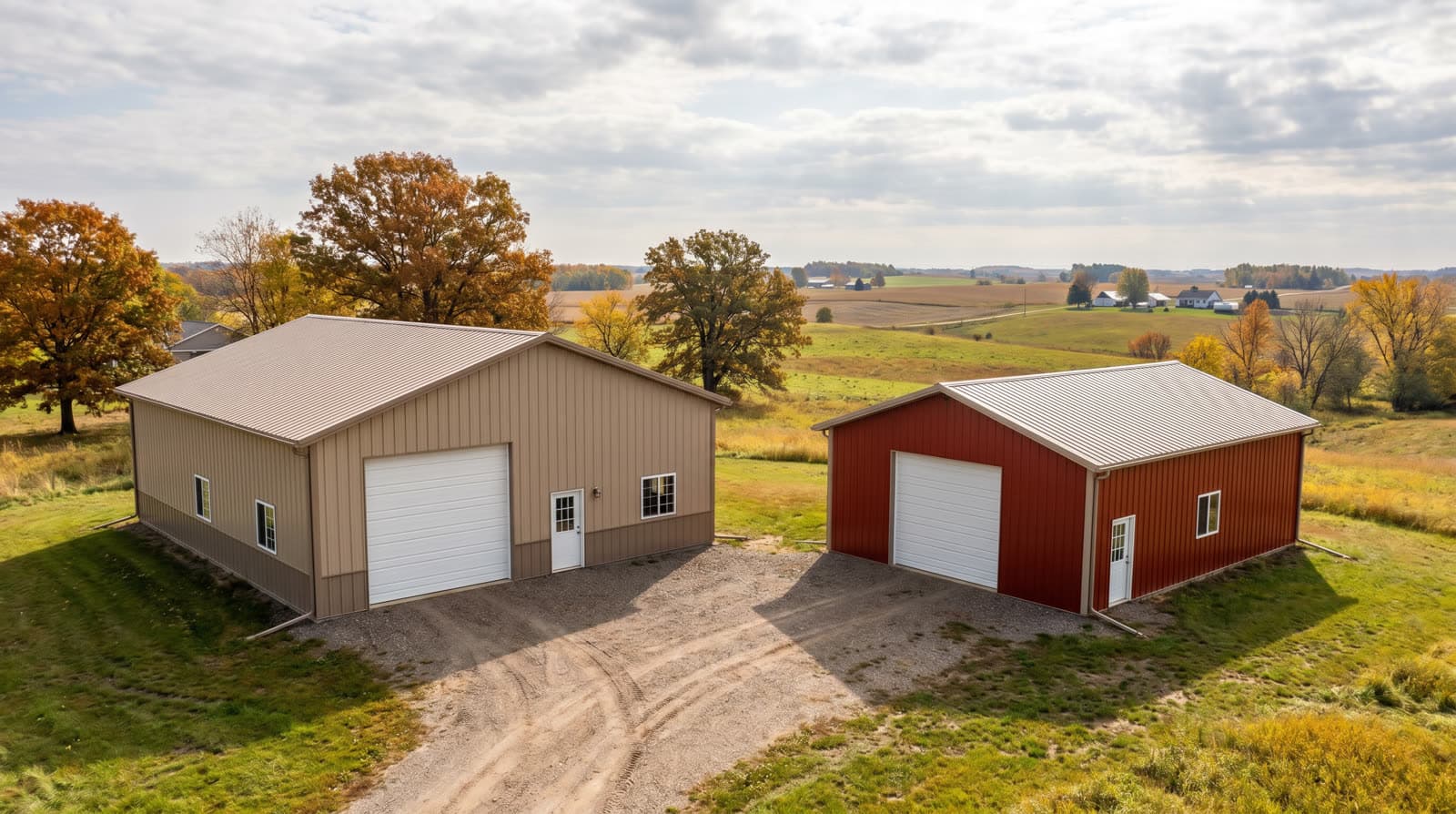
- Days 9–10: Sliding doors, overhead doors, walk doors, and windows installed; final trim and gable details.
Weather is the single biggest variable. Summer in Minnesota is generally favorable, but thunderstorm cells, sustained rain, or excessive heat can push truss and roof days. Crews work through normal summer weather and only stand down for safety reasons — high winds, lightning, or sustained downpours.
Phase 6: Concrete and Finish Work (1 to 4 Weeks)
If your pole barn includes a concrete floor, it's typically poured after the shell is up — posts are already in the ground, so concrete is poured around them. May through September is the optimal concrete season in Minnesota, with June and early September often offering the best balance of temperature, humidity, and contractor availability.
Pouring inside a completed shell helps protect the slab from temperature swings, direct sun, and surprise rain. A typical residential-scale pour and finish takes one to two days. The slab then needs seven to ten days to cure before heavy equipment moves on it. If you're adding in-floor heat, sub-slab insulation, vapor barriers, or interior finishes, the finish phase extends accordingly.
Why Summer Is Peak Season
Late June through early September is when most Minnesota pole barn projects get built: the ground is workable, concrete cures predictably, and crews can put in full daylight workdays. The trade-off is demand. Booking a summer slot in late June or July typically means a build date in August, September, or October. Customers who lock plans in during winter or early spring routinely get their pick of the build calendar.
If you're starting today (late June 2026)
A customer signing in late June 2026 typically sees: design and engineering through July, permits and material orders through July and into August, site prep in mid-August, construction in late August or September, and concrete and finish work into October. Smaller builds can compress significantly; larger custom builds with engineered floor systems or barndominium framing should plan for late fall or early winter completion.
Frequently Asked Questions
How long does it take to build a 40x60 pole barn in Minnesota?
A 40×60 pole barn in our service area typically runs 8 to 12 weeks from signed contract to substantially complete, assuming standard permit timing and no major site work. The structure itself usually frames out in 5 to 10 working days once materials are on site.
Can a pole barn be built in two weeks in Minnesota?
The shell of a small to mid-sized pole barn can be erected in two weeks once permits, materials, and site prep are all complete. The catch is that you can't compress engineering, permitting, and material lead times into two weeks. The fastest realistic end-to-end timeline for a Minnesota pole barn is roughly 6 weeks, and that assumes everything goes right.
What's the latest in the season I can pour concrete?
In our service area, concrete pours generally happen comfortably through mid-October, with proper precautions extending the window into early November. Cold-weather concreting practices — heated water, accelerators, blankets, and protected enclosures — make late-fall pours possible but add cost and complexity. Most homeowners are better served pouring before mid-October when the schedule allows.
Do I need a permit for a pole barn in Minnesota?
Almost always, yes. Each Minnesota county sets its own thresholds, but most pole buildings above the smallest agricultural exemption sizes require a permit. We help customers navigate the application in each of the counties we serve. Even buildings that may be ag-exempt benefit from a documented permit for resale, insurance, and any future expansion.
What happens if weather delays my build?
We build through normal Minnesota summer weather, but safety comes first. Lightning, sustained high winds, and heavy rain can push framing days, and excessive heat occasionally limits afternoon work. A good rule of thumb is to add one to two weather buffer days per week of scheduled construction during peak summer. We communicate any schedule changes as soon as we know.
Can I move into a barndominium right after the shell is built?
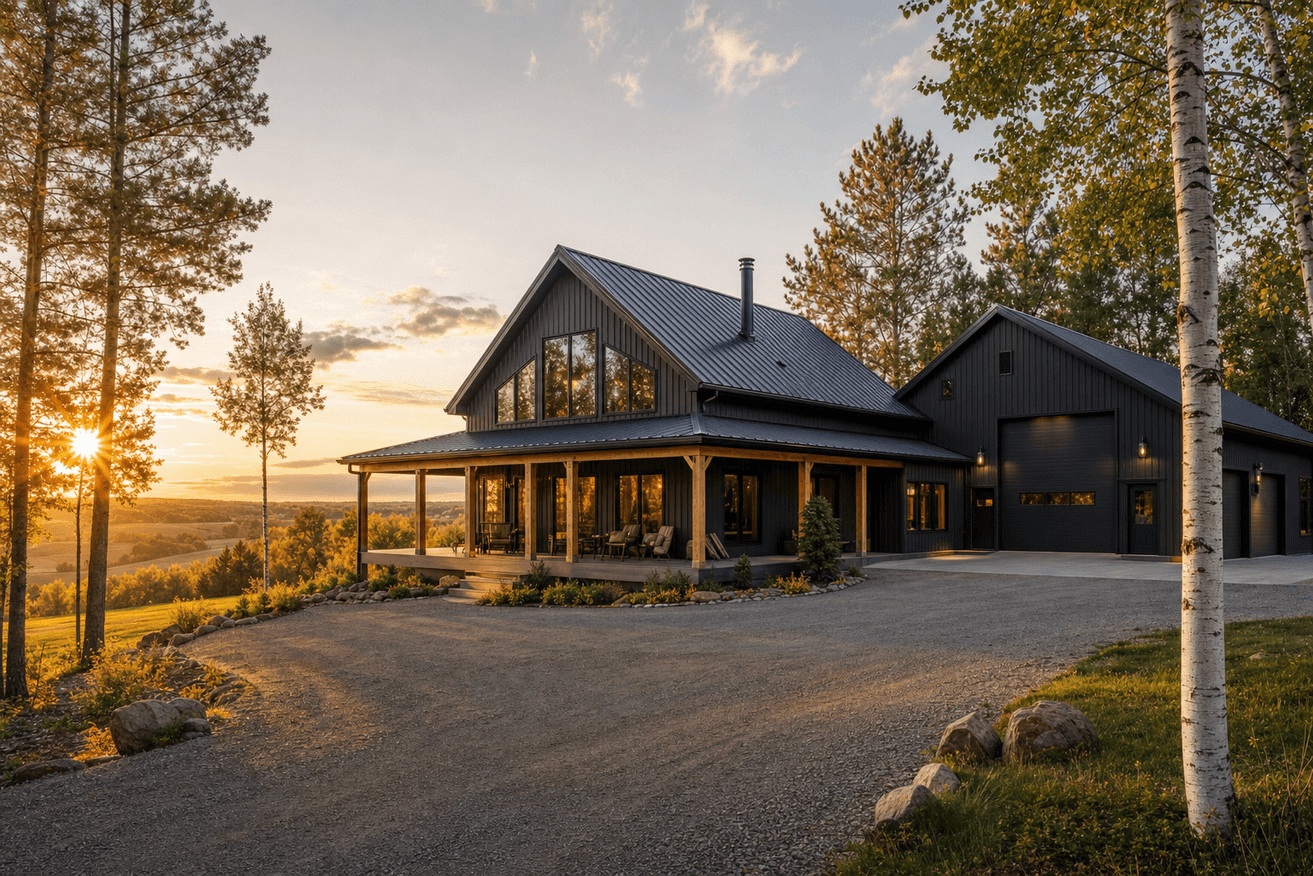
No — the shell is the first phase of a barndominium project, not the last. After the post-frame shell is complete, interior framing, electrical, plumbing, HVAC, insulation, drywall or alternative finishes, flooring, and fixtures all need to be installed. Plan on an additional 12 to 20 weeks for a finished barndominium interior beyond the shell timeline, sometimes more depending on scope and trade availability.
Plan Your Sherman Buildings Project
Every site, county, and customer's scope is different — your real timeline depends on the specifics of your build. For a realistic schedule for your property, including current material lead times and our 2026 build calendar, reach out to Sherman Buildings in Mora to start a no-pressure conversation. Whether you're building this summer or planning for next year, getting the conversation started early is the single biggest thing you can do to land the build window you actually want.