
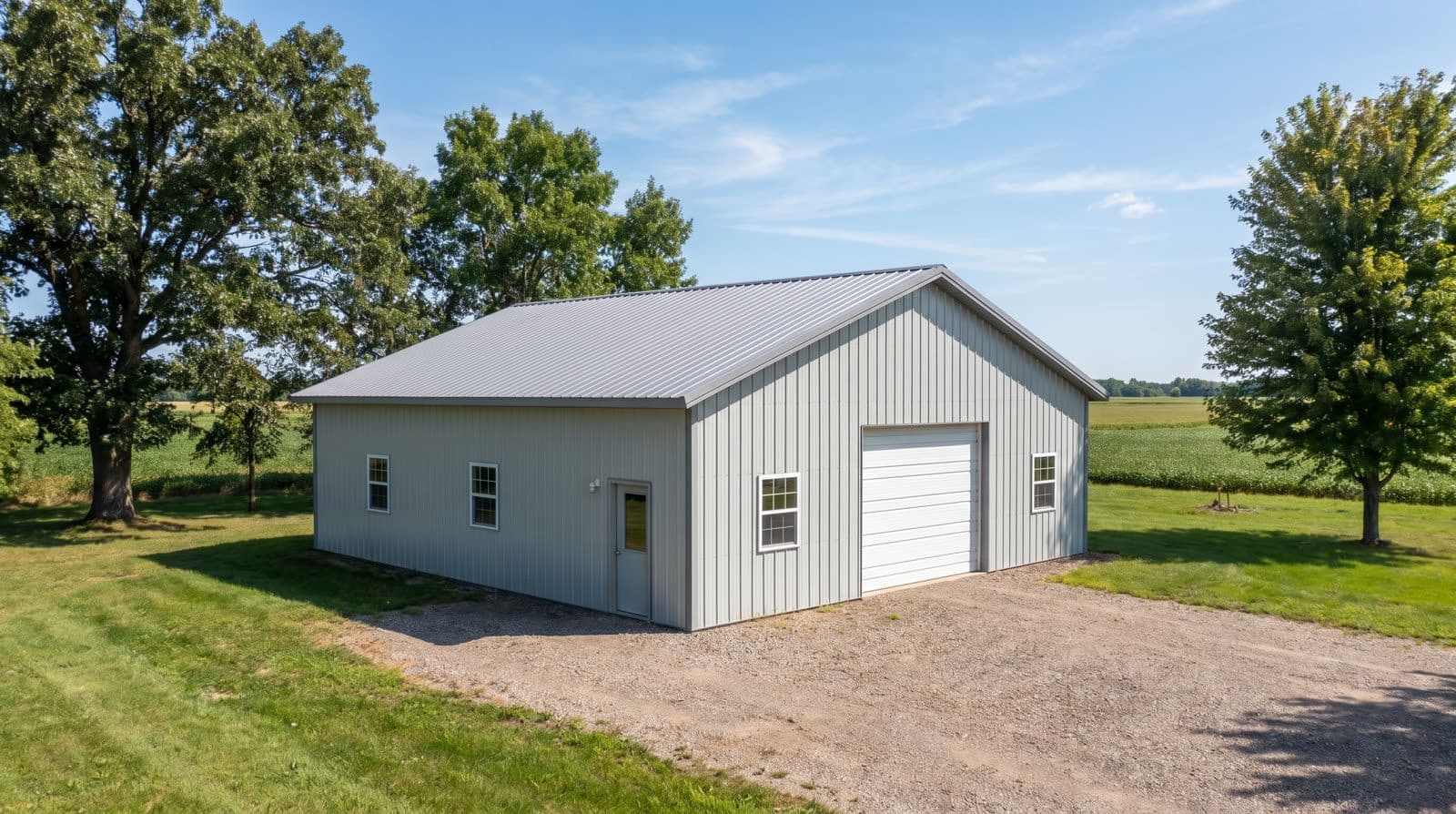
Before you stake out the footprint of a new pole barn in Minnesota, you need to understand who has authority over your project—and what paperwork stands between you and a compliant build. The short answer: permitting authority in Minnesota is layered, with the state setting the minimum code standard, and counties, townships, and cities each playing a distinct role depending on where your property sits. Getting clear on this early prevents costly surprises.
How Minnesota's Building Code System Works
The Minnesota Department of Labor and Industry (DLI) administers the Minnesota State Building Code, which under Minn. Stat. § 326B.121 is "the standard that applies statewide for the construction, reconstruction, alteration, repair, and use of buildings and other structures of the type governed by the code." The State Building Code supersedes the building code of any municipality. That means no city or county can adopt a locally stricter building code on their own—though they can enforce the state code through local ordinance and add zoning, setback, and land-use regulations on top of it. You can review the DLI's current codes overview to see which code editions are currently adopted.
The authority having jurisdiction (AHJ) is the entity—county, city, or township—responsible for issuing permits and conducting inspections within a given area. In Minnesota, this varies significantly. Some counties operate robust building permit departments. Some townships handle their own permits. In other areas, the county has contracted with the state or a third-party inspector. Your first step on any pole barn project is to identify your AHJ and contact them directly.
When Is a Permit Required for a Pole Barn?
For most pole barns—storage buildings, shops, machine sheds, garages, and similar accessory structures—a building permit is required. The 2020 Minnesota Residential Code classifies storage sheds and similar accessory structures as occupancy group IRC-4, and the state's guidance is clear: one-story sheds of 200 square feet or less are exempt from a building permit requirement, but all structures must still comply with the code, local ordinances, and other laws. A pole barn of any meaningful size—any structure a landowner would typically hire a contractor to build—will almost certainly require a permit. Electrical work requires a separate electrical permit regardless of whether a building permit is needed.
Pole barn plans submitted to most Minnesota jurisdictions must include engineered drawings. Many counties—including Chisago, Blaine, and others—explicitly require that pole barn plans be signed by a Minnesota-licensed structural engineer. Engineered truss designs from the truss manufacturer are also standard. Your contractor will coordinate this as part of the project package.
The Agricultural Building Exemption: What It Covers (and What It Doesn't)
Minnesota law carves out a meaningful exemption for agricultural buildings. Under Minn. Stat. § 326B.103, an agricultural building is defined as a structure that is: (1) on agricultural land as determined by the assessor under § 273.13, subd. 23; (2) designed, constructed, and used to house farm implements, livestock, or agricultural products; and (3) used only by the owner, lessee, sublessee, their immediate families, employees, and persons engaged in the pickup or delivery of agricultural products.
When a building meets that definition, Minnesota Rules 1300.0030, subpart 2A states that "the State Building Code does not apply to agricultural buildings" except for floodplain compliance (§ 103F.141), electrical inspection (§ 326B.36), and skylight support requirements. In practical terms: a true agricultural building on qualifying farmland may not require a standard building permit. However, this exemption has strict conditions, and local zoning requirements—setbacks, land use permits, and shoreland rules—still apply even when the building code exemption is in effect.
To qualify, the land typically must be classified as agricultural (often 10 or more contiguous acres used for farming, with some exceptions for intensive operations), and the building must be used exclusively for agricultural purposes—no portion used for non-farming equipment or open to the general public. Many counties, including Sherburne, require an Agricultural Building Permit Exemption Certification even when the full permit is waived. Electrical work still requires a permit and inspection regardless.
If your project is a shop, hobby barn, garage, or multi-purpose building that does not meet the strict agricultural-use definition, expect a standard building permit process regardless of acreage.
County-by-County: How Requirements Vary
Because the AHJ can be a county department, a township, or a city, requirements vary considerably across Sherman Buildings' service area. Here are four examples from our primary Minnesota counties:
Kanabec County
Kanabec County—where Sherman Buildings is headquartered in Mora—has its own land use ordinance and zoning regulations. Building permit authority in the county can fall to either the county or the specific township depending on whether the township has adopted the State Building Code. Arthur Township, for example, is itself the authority on building permits within its borders, while Kanabec County Environmental Services handles shoreland zoning county-wide. If your property is near a lake, river, or other public water, expect to navigate both county shoreland permits and local building authority requirements.
Pine County
Pine County administers its own zoning ordinance, and property owners need to verify permit and zoning requirements with the county's planning and zoning department before construction. Pine County falls within the 60 psf ground snow load zone under the Minnesota State Building Code—an important engineering consideration for any structure built here. Shoreland setbacks apply near the St. Croix River and the many lakes within the county. Setback requirements and zoning districts can differ significantly between townships, so confirming with the county early is essential.
Crow Wing County
Crow Wing County Land Services issues land use permits and manages zoning for unincorporated areas of the county. The county operates an online permitting portal and notes that sheds up to 160 square feet are exempt from land use permits (though they must still comply with setbacks). Crow Wing County does not issue building permits for incorporated municipalities within the county—those areas must contact their city directly. Given the high concentration of lakes in Crow Wing County, shoreland regulations are frequently a factor and require county review before site plan approval.
St. Louis County
St. Louis County is Minnesota's largest county by area and has some of the most variable local conditions. It is in the 60 psf snow load zone, and many areas are subject to shoreland or floodplain overlays. Permitting authority can rest with the county or with individual townships, and the Duluth city area has its own municipal code administration. Property owners in St. Louis County should contact the county's planning and community development department to confirm which authority applies to their specific parcel before submitting any permit application.
Setbacks, Shoreland, and Zoning Overlays
The 2020 Minnesota Residential Code does not set minimum property line setback requirements for accessory structures—local zoning ordinances govern setbacks entirely. This means the required distance between your pole barn and the property line, road right-of-way, or neighboring structure will depend on your county and zoning district, not on the state building code.
If your property is within a shoreland area—generally defined as land within 1,000 feet of a lake or 300 feet of a river or stream—state shoreland rules apply on top of local zoning. Minnesota's shoreland regulations establish minimum setbacks from the ordinary high water level (OHWL), limit impervious surface coverage to 25 percent of the lot, and restrict vegetation clearing near the shore. These rules are administered through local zoning—not the DNR directly—so you still work with your county or township, but the standards are set by the state.
Code also requires that accessory structures not be placed within a property's drainage and utility easements, and that walls less than five feet from a property line meet one-hour fire-resistance-rated construction. These apply statewide regardless of local ordinance.
What the Permit Process Looks Like in Practice
While the exact steps vary by jurisdiction, here is the general sequence for a permitted pole barn in Minnesota:
- Confirm your property's zoning district and identify the correct AHJ (county, township, or city).
- Determine applicable setbacks and any shoreland, floodplain, or overlay requirements.
- Obtain engineered building plans and a site plan showing the proposed structure's location relative to property lines and existing structures.
- Submit the permit application and plans to the AHJ; review times range from a few business days to several weeks.
- Schedule required inspections: typically post setting/footing, framing, rough electrical (if applicable), and final.
How Sherman Buildings Helps with Permitting
Sherman Buildings has been building post-frame structures across Minnesota since 1976. Because our team works regularly in Kanabec, Pine, Crow Wing, St. Louis, and surrounding counties, we are familiar with the local AHJs, their application processes, and the engineering documentation each typically requires. We provide engineered plans as part of every project package and can guide you through the permit process—though the permit is ultimately applied for in the property owner's name.
The single most important thing you can do before designing your building is confirm your property's zoning district and AHJ contact. Setback requirements, use restrictions, and permit documentation vary enough by county and township that we always recommend that conversation before we finalize a building layout. Contact us to discuss your project and we can help you identify what you'll need.
Frequently Asked Questions
Do I need a permit for a pole barn on agricultural land in Minnesota?
Possibly not, if the building strictly meets Minnesota's agricultural building definition—but local zoning requirements still apply. Many counties require an Agricultural Building Permit Exemption Certification before you build, and electrical work always requires a permit.
Who issues my building permit—the county or the township?
It depends on whether your township has adopted the State Building Code. Some townships are the AHJ for building permits within their borders; others defer to the county. Contact Kanabec County Environmental Services, Pine County Planning and Zoning, Crow Wing County Land Services, or the relevant county office to find out which entity has jurisdiction over your parcel.
Do pole barns need engineered plans in Minnesota?
Most jurisdictions require that pole barn plans be stamped by a Minnesota-licensed structural engineer. Trusses must be designed to accepted engineering standards. Sherman Buildings provides engineered building packages as standard.