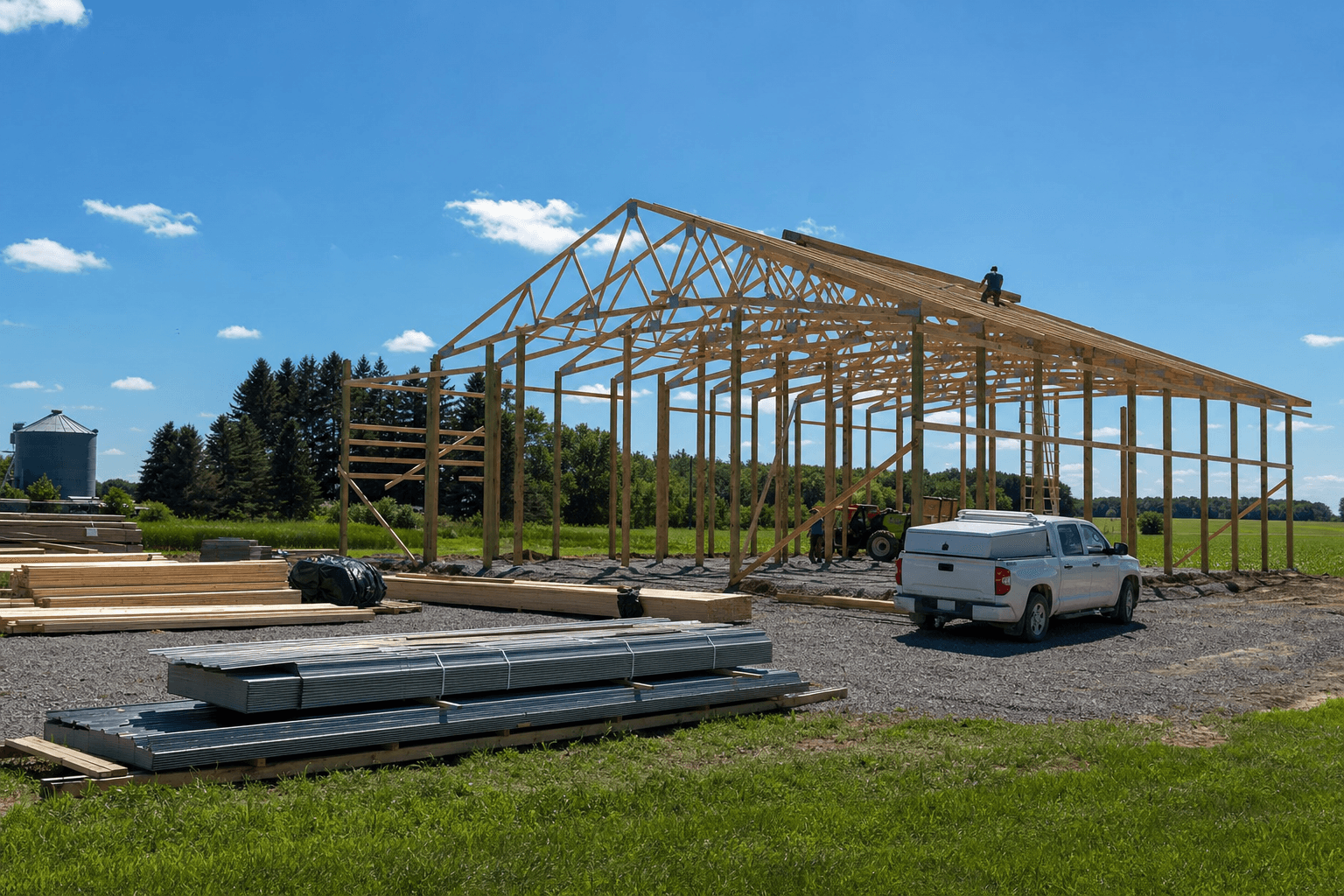
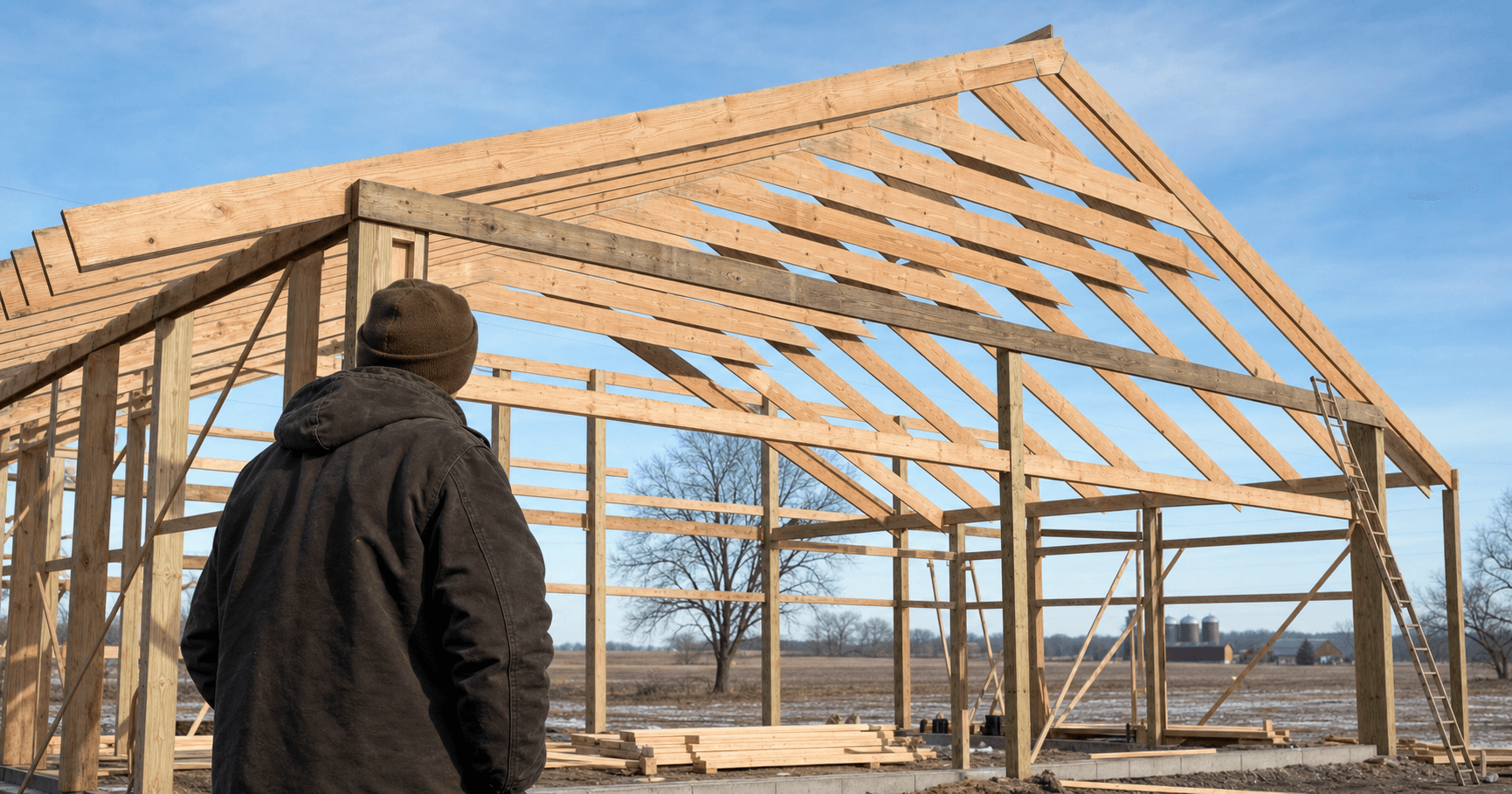
Searching for a barndominium for sale in Minnesota is a very different experience than shopping for a traditional home. Real-estate listings are limited, terms like "barndominium," "shouse," and "pole barn home" are used inconsistently, and many advertised properties turn out to be older shops that were converted after the fact — sometimes without proper permits or code compliance. If you are looking in Kanabec, Pine, Mille Lacs, Isanti, Chisago, or Aitkin County, this guide walks through what to actually look for on a Minnesota barndominium listing, what documentation to demand, and when it makes more sense to build custom instead of buy.
Why Barndominium Listings Are So Scarce in Minnesota
Barndominiums are still a relatively new residential category in Minnesota's Multiple Listing Service. Most real-estate platforms do not have a distinct filter for them, so listings hide inside "single-family home," "farm," or "hobby farm" categories. That scarcity is worth understanding before you spend months refreshing search alerts.
First, most Minnesota barndominiums have only been built in the last decade, and owners tend to hold them. They were built to be lived in long-term, often on rural acreage that families do not sell casually. Second, some of the structures marketed as barndominiums were originally permitted as agricultural buildings and later informally converted to living space. Those properties can be difficult to finance, insure, and legally occupy — and they should raise immediate questions during due diligence.
The Minnesota Department of Labor and Industry is explicit that barndominiums and shouses are single-family dwellings under the 2020 Minnesota Residential Code, not agricultural buildings, and they require full residential building permits and licensed residential contractors ([DLI barndominiums fact sheet](https://www.dli.mn.gov/sites/default/files/pdf/fs-barndominiums.pdf)). If a listing agent cannot produce records of a residential permit and final certificate of occupancy, that is not a paperwork detail — that is the whole conversation.
What to Verify Before You Tour a Minnesota Barndominium Listing
Before driving out to see a property, get a copy of the following documents. Any serious listing agent or seller should have them on hand, and any hesitation to share them is meaningful information.
Permits and Certificate of Occupancy
Ask for the original residential building permit, the approved plan set, and the final certificate of occupancy from the county. If the structure was built or converted without a residential permit, you may inherit code-compliance liability and financing obstacles at closing. Sherburne County, for example, requires a full residential permit process for barndominiums and shouses and lists them alongside single-family dwellings in its planning materials ([Sherburne County Building Permits](https://www.co.sherburne.mn.us/328/Building-Permits)).
Engineered Structural Drawings
Post-frame construction is not covered by the prescriptive light-frame provisions of the 2020 MNRC, which means the structural design must be stamped by a licensed engineer. Ask to see the stamped drawings — trusses, post spacing, foundation, uplift, snow load. If they do not exist, financing lenders and insurers will notice.
Foundation and Frost Protection
Minnesota Rule 1303.1600 governs frost depth for residential dwellings. Post footings, slab-on-grade, and conventional foundations all have code-required frost protection details, and post-frame homes must comply. Ask which of the five allowed frost-footing options was used and verify it matches the stamped drawings.
Insulation, Vapor, and Radon
Most of Sherman Buildings' service area is Climate Zone 6A; northern counties like Aitkin brush into Zone 7. The 2020 Minnesota Residential Code and Minnesota Energy Code set R-value targets and air-leakage limits based on those zones. Slab-on-grade or ground-contact floor systems also require a radon control system compliant with Minn. R. 1303.2400. Any conditioned space that skips these is not a bargain — it is a future rebuild.
Common Red Flags on Minnesota Barndominium Listings
After walking clients through dozens of listings over the years, the same handful of issues come up again and again. If any of these show up in a listing description or a first tour, slow down.
- The property is described as an "ag building with living quarters" but marketed as a residence. Minnesota does not treat agricultural exemption as a path to residential occupancy.
- Listing agent cannot produce a certificate of occupancy or permit record, and suggests "the county was fine with it."
- Exterior walls sit within five feet of a property line without documentation of one-hour fire-resistive assemblies, which the 2020 MNRC requires.
- No vapor retarder details, no blower-door test results, and no evidence of a radon system on a slab-on-grade floor.
- Metal roof trusses on a residential structure with no engineering documentation. In Minnesota, residential post-frame construction using wood trusses on treated posts is far more common and is what most licensed residential contractors here build.
- Zoning designation is "agricultural" rather than residential, and no conditional use permit or land-use approval is on file.
Buying an Existing Barndominium vs. Building Custom in Minnesota
The trade-off comes down to three factors: what is actually available, how much code and quality risk you are willing to inherit, and how well an existing floor plan matches how you actually want to live.
Availability
In our six-county service area, barndominium listings appear infrequently, and the ones that do come up rarely match a specific buyer's acreage, layout, and outbuilding requirements. Buyers often spend six to twelve months waiting, then settle for a property they will need to renovate anyway.
Code and Quality Risk
A custom build starts with engineered drawings, a licensed Minnesota residential building contractor, and a permit process from day one. An existing barndominium listing can be excellent — or it can be an unpermitted shop conversion. Custom construction removes that guesswork, particularly for critical items like frost footings, snow loads for Climate Zone 6A/7, vapor management, and energy code compliance.
Fit With How You Actually Live
Barndominium buyers usually want specific things: a shop bay for a specific vehicle or piece of equipment, a mudroom sized for Minnesota winter gear, a great room with real ceiling height, or a floor plan that keeps quiet living space away from the shop. Existing listings rarely check all of those boxes. Building custom lets you design around your equipment, your family, and your county's specific setback and shoreland rules.
What Drives Cost — and Why We Won't Quote Prices Sight-Unseen
Every quote we give on a Minnesota barndominium is site-specific. We do not publish per-square-foot pricing because two barndominiums with identical footprints can differ substantially in final cost depending on the factors below.
- Site conditions: soil bearing capacity, grading, tree clearing, driveway length, access for concrete trucks and cranes.
- Foundation choice: post footings vs. slab-on-grade vs. conventional foundation, and required frost protection details per MN Rule 1303.1600.
- Building envelope: wall and ceiling R-values for Climate Zone 6A or 7, spray foam vs. batt strategies, continuous insulation, air-sealing detailing.
- Interior finish level: rough shop-style interior vs. fully finished living space with drywall, trim, cabinetry, and flooring.
- Mechanical systems: HVAC sizing, in-floor hydronic vs. forced air, plumbing runs, electrical service size, radon system per Minn. R. 1303.2400.
- Site services: well and septic if not municipal, utility trenching, and any shoreland or wetland compliance work.
Any listing that advertises a fixed "barndominium for sale" price without disclosing which of these are and are not included deserves a very careful walk-through with your own engineer and contractor. Sherman Buildings quotes are written after a site visit, a use-case conversation, and an engineering review — never before.
How to Search Smarter for a Barndominium in Minnesota
If you still want to buy rather than build, the mechanics of the search matter. A few adjustments dramatically improve what shows up in your feed.
- Search by acreage and shop-size keywords, not just "barndominium." Terms like "shouse," "pole barn home," "shop with living quarters," and "post-frame home" surface listings the algorithm otherwise buries.
- Filter by rural county rather than metro proximity. Kanabec, Pine, Mille Lacs, Isanti, Chisago, and Aitkin counties tend to have more post-frame residential inventory than closer-in metro counties.
- Watch land listings in parallel. A well-priced parcel plus a custom build is often faster than waiting for the exact turnkey property, and the total investment is more predictable.
- Request a pre-purchase inspection from a builder familiar with post-frame residential construction, not just a general home inspector. The inspection questions are different.
Frequently Asked Questions
Are there many barndominiums for sale in Minnesota right now?
Inventory is limited. Most Minnesota barndominiums were built recently and owners tend to hold them long-term. When listings do appear, they often do not match a specific buyer's acreage, floor plan, or shop requirements. Many buyers ultimately choose to build custom on land they already own or acquire.
Is a barndominium classified as residential or agricultural in Minnesota?
Residential. The Minnesota Department of Labor and Industry classifies barndominiums and shouses as single-family dwellings under the 2020 Minnesota Residential Code, regardless of appearance. Building permits, licensed residential contractors, and full code compliance are required across the entire state.
Can I finance an existing Minnesota barndominium?
Generally yes — if it was permitted, engineered, and built as a residential dwelling with a certificate of occupancy. Lenders and appraisers will look for the same documentation you should be looking for as a buyer. Unpermitted or ag-classified conversions are far harder to finance and insure.
Do barndominiums hold their value in rural Minnesota?
Comparable-sales data is still thin because the category is relatively new. Well-built, permitted, professionally engineered barndominiums in Kanabec, Pine, and Chisago counties are performing well in resale so far. Unpermitted conversions and DIY builds are more difficult to appraise and sell.
What is the difference between a barndominium and a shouse in Minnesota?
Functionally, very little. Both are post-frame residential structures. The Minnesota Department of Labor and Industry addresses them together in its guidance, and both fall under the 2020 Minnesota Residential Code. "Shouse" typically emphasizes a shop-plus-house layout, while "barndominium" is used more broadly, but the code treats them identically.
Should I buy an existing barndominium or build one custom in Minnesota?
It depends on how quickly you need to move in, how well available listings fit your requirements, and how much verification work you are willing to do on an existing structure. Buyers who cannot find a listing that matches their acreage, shop needs, and floor plan typically get better long-term value from a custom build with engineered drawings and full permitting from day one.
Talk With a Minnesota Post-Frame Builder Before You Sign Anything
Whether you are evaluating a barndominium listing you already found or considering a custom build on your own land, a short conversation with a licensed Minnesota residential builder is worth having before you commit. Sherman Buildings is based in Mora and serves Kanabec, Pine, Mille Lacs, Isanti, Chisago, and Aitkin counties. We are happy to review listing documentation, walk your land, and talk through what a code-compliant custom build looks like on your site. No pressure — just an honest conversation about whether buying or building makes more sense. Reach out any time to schedule a consultation.