If you've been researching a new build on rural property in Minnesota, the same two terms keep coming up: pole barn house and barndominium. They sound similar. They often look similar from the road. They share a lot of the same construction methods. And yet they are not exactly the same thing, and the distinction matters for permits, financing, and how the building lives once it's finished. Here is how to think about the difference, what each one is really suited for, and how to decide which makes sense for your land.
Sherman Buildings is headquartered in Mora and works across Kanabec, Pine, Mille Lacs, Isanti, Chisago, and Aitkin counties. We build a lot of both, and the conversation almost always starts with this same question: which one am I actually looking for?
Quick Definitions
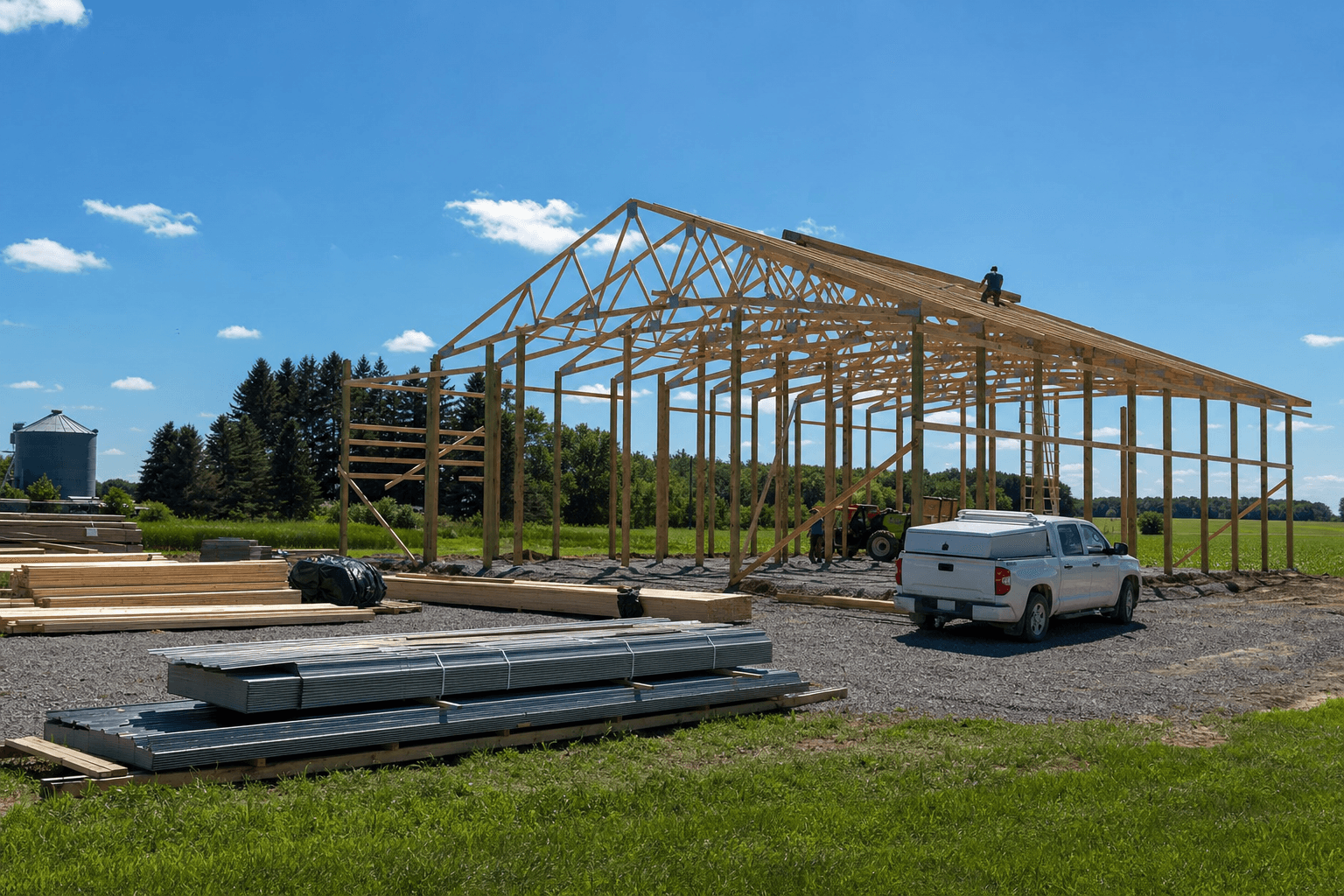
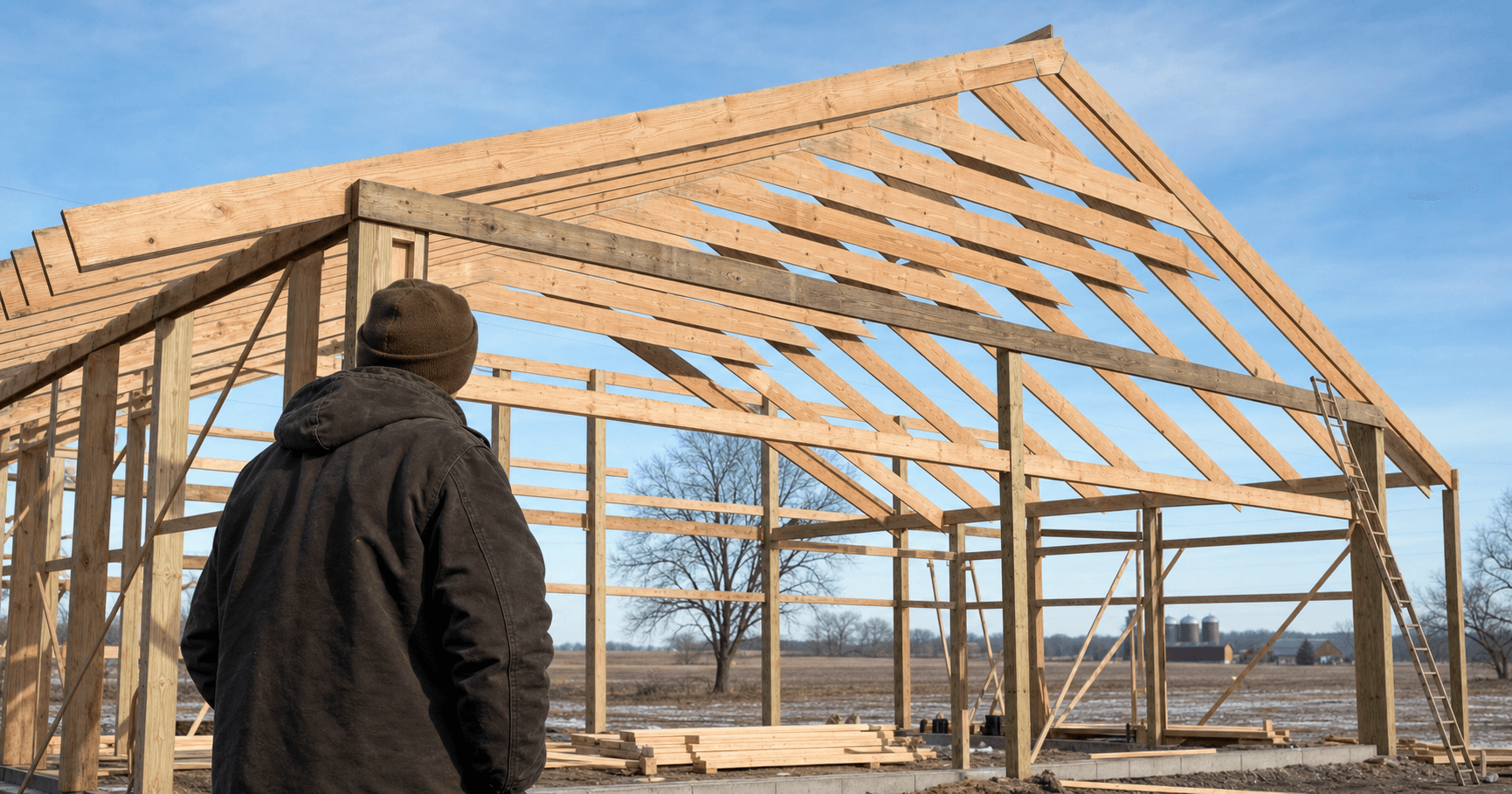
Both pole barn houses and barndominiums are built using post-frame construction. That means treated wood posts set into the ground at regular intervals, engineered wooden roof trusses spanning between them, and a wood-framed envelope wrapped in metal panel siding or other finish materials. The structural method is the same. The difference shows up in how the building is used and how it's finished.
Pole barn house
A pole barn house, sometimes called a post-frame home, is a residential dwelling built on a pole barn frame. The exterior often still reads as a traditional barn shape — a tall gable roof, sliding or overhead doors on one side, a more agricultural look overall. The interior is finished to residential standards: insulation, drywall, flooring, plumbing, electrical, HVAC. From the inside, you'd never know you were in something other than a conventional house.
Barndominium
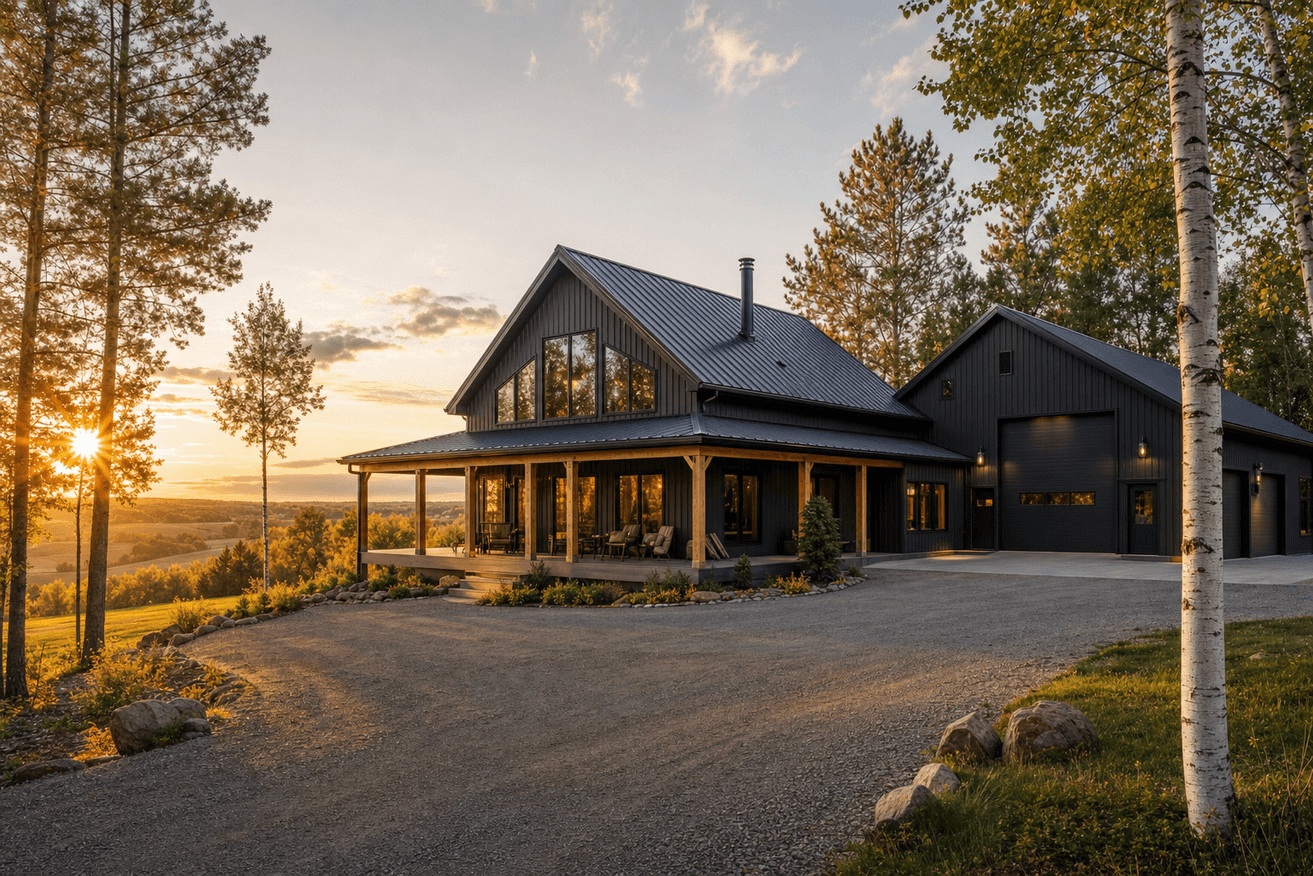
A barndominium — sometimes shortened to "barndo" or paired with "shouse" (shop-house) — is also a post-frame residential dwelling, but the typical layout deliberately combines living space with shop, storage, or hobby space under one roof. Picture a finished living area on one end of a big rectangular building, with a tall shop or garage bay attached on the other end. Same construction method. Different floor plan philosophy.
In practice, the two terms get used interchangeably across builders and counties, and even the Minnesota Department of Labor and Industry treats them together in its guidance, describing both as post-frame dwellings that fall under the 2020 Minnesota Residential Code (MNRC).
What Minnesota Code Actually Says
From a code standpoint, the State of Minnesota does not draw a meaningful line between "pole barn house" and "barndominium." The Minnesota Department of Labor and Industry's published guidance is explicit: both are dwellings, both require building permits, and both must comply with the 2020 Minnesota Residential Code regardless of which name a builder or buyer uses.
Key MN code points for either build
- Engineered drawings stamped by a structural engineer are required, because post-frame construction is not addressed by the prescriptive light-frame provisions of the residential code.
- Footings must extend below the frost line per MN Rule 1303.1600 — generally 42 inches or deeper depending on county and elevation.
- Snow load and ground snow load values for Climate Zone 6A/7 must be designed for the local code-required values.
- A radon control system per Minn. R. 1303.2400 is required for slab-on-grade or ground-contact floor systems.
- A licensed Minnesota residential building contractor is required for construction, because these are residential dwellings — not ag buildings.
If a builder or salesperson tries to tell you a barndominium is exempt from residential code because it "looks like an ag building," that is not how Minnesota's enforcement works. The intended use as a dwelling is what determines code, not the appearance.
How To Decide Between Them
Because the structural method is the same and the code applies equally to both, the decision is really about layout, lifestyle, and the rhythm of your property. Here is how we usually frame the conversation with customers.
Choose a pole barn house if…
- You want the building to read as a home from the outside — front porch, residential windows, fewer overhead doors.
- Your shop, garage, or storage needs are modest and can be handled by a small attached or detached outbuilding.
- You're planning to add formal landscaping, a yard, and the building will sit close to a neighborhood-like setting.
- Resale to a traditional homebuyer is a priority — pole barn homes finished as residences typically appraise more like conventional houses than mixed-use barndos.
Choose a barndominium if…
- You want big shop or garage space attached to the living area — RVs, boats, tractors, woodworking, gunsmithing, a side business.
- You'd rather build one structure than two, both for cost reasons and because you can move between living and working space without going outside.
- You love an open, modern, industrial interior with high ceilings and big windows on the residential end.
- Your property is rural and you don't have HOA or neighborhood-style restrictions to worry about (always confirm with your county zoning office).
Cost Factors You Should Know About
We don't quote pricing in articles — every site, scope, and finish package is different — but it helps to know which factors actually move the number for each build. When you reach out for a quote, expect these to drive the conversation.
Square footage and roof span
Larger spans require larger engineered trusses and more substantial post sizes. A wide-clear-span shop bay attached to living space — a hallmark of barndominium designs — is generally more expensive to frame than the same footprint in a tighter pole-barn-house layout, because the engineered roof has more work to do.
Interior finish level
The shell is only the beginning. Insulation type, drywall vs. exposed wood, flooring choices, kitchen and bath fixtures, HVAC, plumbing, and electrical are typically the largest single driver of total cost in a finished dwelling. Two identical post-frame shells can finish out at very different totals depending on interior selections.
Foundation and site work
Post-and-footing foundations are usually less expensive than full perimeter foundations, which is one of the cost advantages of post-frame construction. But site preparation, grading, frost-depth excavation, gravel base, and concrete slab work still need to be budgeted properly. A site with significant slope, wet ground, or tree clearing adds meaningfully to the bottom line.
Mechanicals
In-floor radiant heat is popular in Minnesota post-frame homes and barndominiums and is best installed before the slab is poured. Adding it later is significantly more expensive. The same applies to sub-slab plumbing and any embedded conduit runs.
Financing Realities In Minnesota
Financing post-frame dwellings — whether you call them pole barn houses or barndominiums — can be slightly different from financing a conventional stick-framed home. Some traditional mortgage lenders have limited experience with post-frame appraisals and may require additional documentation or appraisal comparables. We routinely point customers toward local Minnesota lenders and credit unions who have experience with rural post-frame construction loans and one-time-close construction-to-permanent products.
If financing is a key part of your plan, talk to a lender early — ideally before you sign a contract — so you know what documentation, comparables, and finish specifications will be required to get a clean appraisal.
Frequently Asked Questions
Are barndominiums legal in Minnesota?
Yes. Barndominiums are legal across Minnesota when designed and built to comply with the 2020 Minnesota Residential Code, permitted through the local jurisdiction, and constructed by a licensed Minnesota residential building contractor. The Minnesota Department of Labor and Industry publishes guidance specifically covering barndominiums and shouses.
Can I live in a pole barn while I build the rest of the house?
This is heavily county-dependent and generally discouraged. Living in any structure as a dwelling in Minnesota requires that structure to meet residential code — not ag exemption. Some counties will allow a temporary occupancy permit under narrow conditions, but you should never assume this is permitted. Always confirm with your county building official before signing anything.
Do barndominiums hold their value in rural Minnesota?
Increasingly yes, particularly on acreages where the lifestyle of combined shop-and-home space is a selling feature. Comparable sales for well-finished barndominiums have grown across central Minnesota counties over the last several years. Pole barn houses with conventional residential exteriors typically appraise closer to traditional homes.
What's the lifespan of a post-frame home?
When built to code with properly treated posts, engineered wooden trusses, proper moisture management, and quality metal roofing, a post-frame dwelling is engineered for a service life comparable to conventional residential construction. Routine maintenance — paint and trim refreshes, roof inspections, sealing penetrations — applies the same as any home.
Can I add a barndominium-style addition to an existing pole barn?
Sometimes — it depends entirely on whether the existing structure was engineered, permitted, and built to current code. If the existing pole barn was built as ag-exempt or without a residential-quality foundation, converting it to a dwelling or attaching a residential addition is rarely straightforward. We'd rather walk your existing site than guess.
Talk Through Your Build With Sherman
Both pole barn houses and barndominiums are excellent options for rural Minnesota property, and the right answer depends on how you actually want to live and work on your land. We're happy to walk through both with you, look at your site, and talk honestly about which makes more sense for your goals, your county, and your budget — no pressure and no obligation.
Reach out to Sherman Buildings in Mora to start the conversation. Bring your wish list, bring your questions, and we'll help you sort out the differences in real terms for your project.